Over the last six months, a few of the library’s databases have received some new features and enhancements: UptoDate Expert AI, Still OneSearch, Covidence AI Extraction Suggestions, and LibKey Nomad. Find out more about these resources below:
UptoDate Expert AI Dosing Feature:
UpToDate Expert AI is expanding its clinical capabilities with the upcoming rollout of patient-specific drug dosing information, designed to deliver trusted medication guidance directly within natural conversation workflows. Because medication management directly impacts patient safety, this enhancement pairs UpToDate’s evidence-based drug intelligence with transparent clinical reasoning, highlighting critical considerations and supporting rationale to assist with complex decision-making.
The capability has undergone rigorous controlled testing and will continue to be actively monitored through structured audits, human review, and real-time user feedback. By integrating governed AI-assisted dosing support directly into standard clinical research flows, this feature streamlines medication-related queries, reduces practice variation, and empowers users with confident, evidence-based guidance.
LibKey Nomad Problematic Publishers & Gen AI links:
LibKey Nomad (from Third Iron) now makes reaching library articles even easier directly inside popular AI platforms, including Gemini (ATSU’s preferred tool). Whenever you’re using these AI assistants and a cited article includes a DOI, the familiar LibKey button will pop up right inline. It links you straight to ATSU’s licensed full-text resources in a single click, saving you time and keeping your research momentum going without having to switch back and forth.
Additionally, they have introduced a new “Problematic Publisher” feature across LibKey services to help researchers navigate scholarly integrity. Based on Third Iron’s review process—which checks publishers against nine key criteria like peer review quality, fee transparency, and editorial oversight—this tool alerts users if an article comes from a publisher with flagged concerns. Displayed right inside PubMed and other discovery tools like Google Scholar, these helpful prompts give researchers clear background details on potential risks while keeping full-text access open, making it easy to critically evaluate sources and decide what works best for their research.
*Image below from Third Iron

Still OneSearch AI Features:
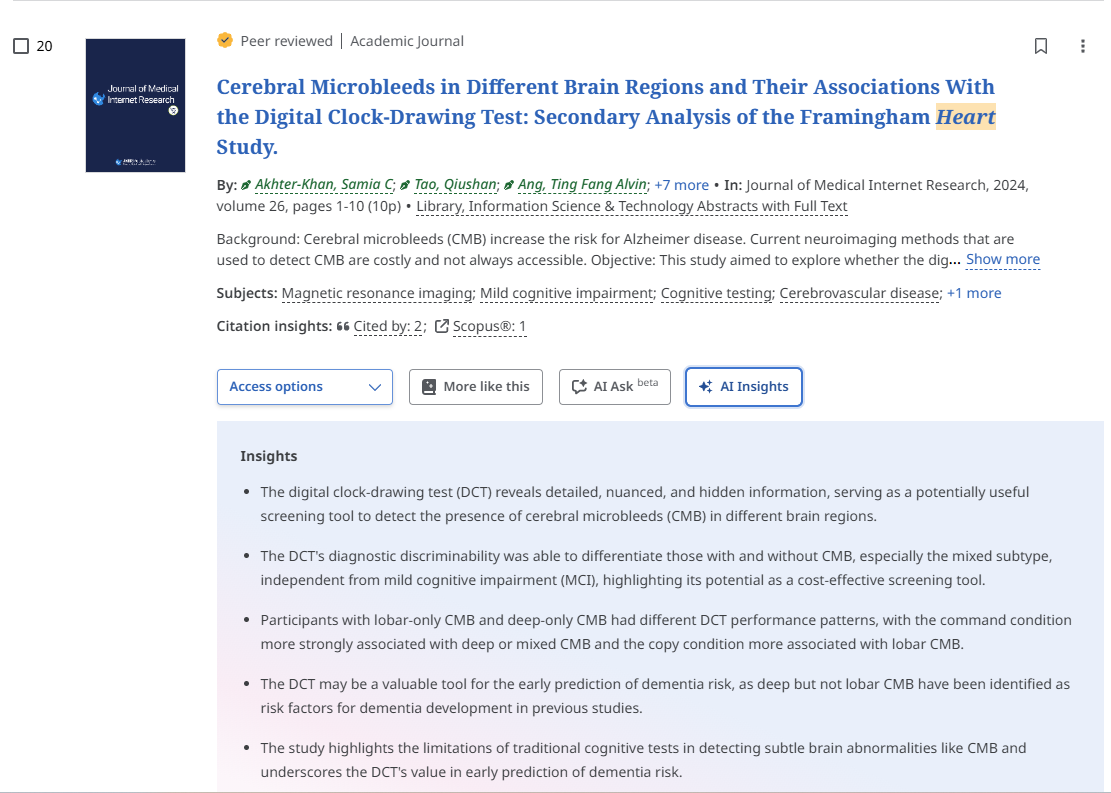
Still OneSearch, ATSU’s all-in-one search engine for academic content, added some handy AI tools to make your research a lot easier. With the new Ask AI feature, you can chat directly with articles to get quick answers to tricky questions, while AI Insights automatically generates easy-to-read summaries of full-text papers so you can skim less and learn faster. Plus, the new More Like This feature suggests related resources on similar topics, making it simple to track down other relevant sources without starting a whole new search.

Covidence AI Extraction Suggestions:
Covidence recently launched a smart AI Extraction feature to help streamline data collection during systematic and scoping reviews. Powered by Google Gemini models through Vertex AI, the tool automatically analyzes full-text PDFs to generate study characteristic suggestions—such as author details, funding sources, inclusion criteria, and sample sizes—along with supporting quotes from the text. This update saves reviewers valuable time by letting them verify pre-populated data points rather than manually retyping every detail from scratch.
To maintain research rigor, the feature keeps human judgment front and center by requiring reviewers to individually accept or reject each suggestion before it enters the final dataset. Enabled by default across supported extraction templates, it offers a secure, privacy-compliant way to speed up literature reviews, reduce manual errors, and keep your overall research process running smoothly.

*Image above from Covidence
If you have any questions or issues about these features and enhancements, please contact your liaison librarian or email libaz@atsu.edu.