QUICK LINKS:
ATSU-ASHS home About ATSU-ASHS Athletic training Audiology Occupational therapy Physical therapy Physician assistant Speech-language pathology Academic calendar University catalog Arizona campus News and events PoliciesAthletic training education at every stage
The ATSU-ASHS Athletic Training Department is home to preeminent graduate athletic training degrees and certificates taught by expert faculty with national influence in the profession. Whether you are interested in becoming an athletic trainer or advancing your practice as a credentialed AT, the department offers a comprehensive athletic training education experience designed to meet you where you’re at in your professional journey.
Globally recognized. Professionally connected.
ATSU-ASHS’ Department of Athletic Training is proud to be an Academic Institution Member of the World Federation of Athletic Training and Therapy (WFATT), reflecting our commitment to advancing athletic training education, research, and collaboration on a global scale.
Find the athletic training degree that’s right for you
This continuum of athletic training education includes entry-level preparation, advanced doctoral study, and post-professional development designed to support learners throughout their AT careers.
Doctor of Athletic Training (DAT)
Empowers athletic training leaders to enhance clinical practice, education, and patient outcomes.
Master of Science in Athletic Training (MSAT)
Expands clinical knowledge and patient- centered care for athletic trainers seeking advanced professional growth.
Master of Athletic Training (MAT)
Prepares aspiring athletic trainers with the clinical skills and confidence needed for certification and practice.
Athletic Training Education Certificate
Equips professionals to teach, mentor, and advance athletic training education programs.
Clinical Decision-Making in Athletic Training Certificate
Strengthens clinical reasoning skills for improved patient care and injury management decisions.
Orthopaedics Certificate
Builds foundational knowledge in orthopaedic care for enhanced athletic training practice.
Rehabilitation Certificate
Focuses on rehabilitation strategies to support recovery and return-to-activity outcomes.
Sports Neurology and Concussion Certificate
Develops expertise in neurological assessment and concussion management in sports settings.
Athletic Training CEU courses
Supports lifelong learning through accredited continuing education and interdisciplinary training.
Beyond the classroom
Athletic training at ATSU extends far beyond graduate education. Through nationally recognized research initiatives, concussion education, clinical technology, and community engagement, the Department of Athletic Training advances the profession while improving patient care and outcomes.
Headquartered at ATSU in Mesa, Arizona, the Athletic Training Practice-Based Research Network (AT-PBRN) is an affiliate network of the Agency for Healthcare Research and Quality (AHRQ) and the first and only practice-based research network in athletic training.
The mission of the AT-PBRN is to improve the quality of care and patient outcomes for individuals under the care of athletic trainers. The network includes athletic training researchers, a biostatistician, a post-doctoral research fellow, a research coordinator, and an external advisory board comprised of athletic trainers from across the country.
LEARN MOREATSU’s Concussion Program serves as a resource for sport-related concussion education, research, and service for young athletes, parents, coaches, and administrators.
Outreach services in Arizona include concussion education, baseline (pre-season) testing, and post-injury evaluations. The program also provides training and education for athletes, coaches, parents, athletic trainers, athletic training students, and other healthcare providers while conducting research focused on concussion awareness, assessment tools, and interventions that enhance recovery.
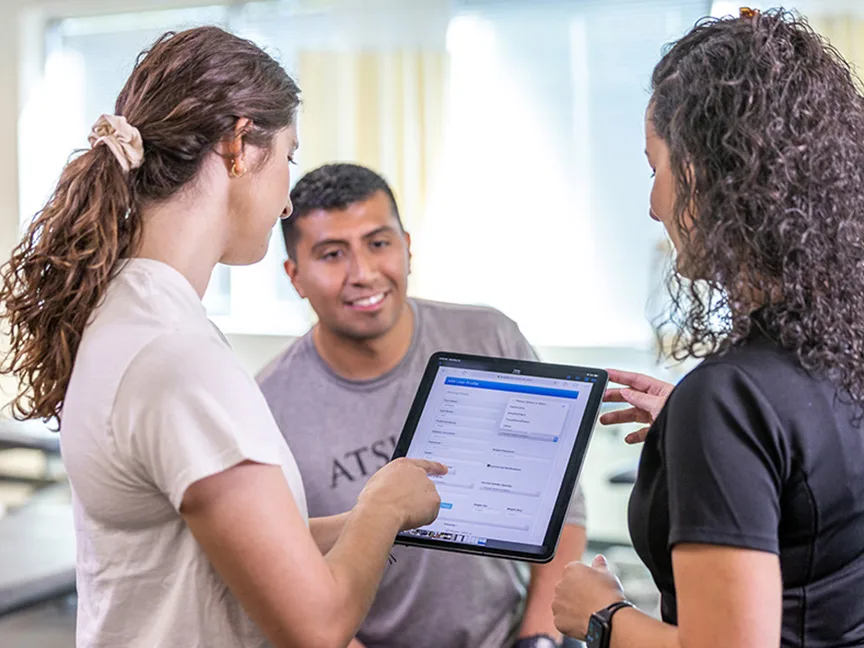
LEARN MOREStudents in ATSU’s athletic training programs utilize the industry-leading CORE-AT electronic medical record (EMR) system, a web-based injury surveillance and electronic medical record platform designed specifically for athletic trainers.
Developed by athletic trainers in partnership with ESSENTIALTALK, the CORE-AT EMR complies with HIPAA standards for data acquisition, storage, and transmission. Health information is securely transmitted in real time to redundant servers rather than stored locally on computers.
LEARN MOREAthletic training research and scholarly work
Athletic training faculty and students from both the residential and online programs participate in scholarly work that is broad in scope and encompasses many forms of scholarship beyond the expectations of discovery research. The department’s scholarly activities emphasize the scholarship of application through community-based projects that advance athletic training practice and improve patient outcomes.
- NATA Position Statement: Management of Sport Concussion
- Clinical Decision Making in Athletic Training
- Questions in the Shoulder: Expert Sports Medicine Advice
- Concussion Reporting Among Secondary-School Athletes
- Perceived Strategies to Enhance Evidence-Based Practice
- The Effect of Kinesio Taping on Anterior Knee Pain
- Functional Movement Screen™ Differences in School Athletes
- AT Students’ Perceived Abilities to Implement Core Competencies
- Physicians’ Concussion Management and Referral Patterns for Adolescent Athletes
- PBRNs Part I: Laboratory Research Findings and Effective Patient Care
- PBRNs Part II: Athletic Training PBRN in the Secondary School Setting
- Evidence-Based Athletic Training Practice, Part I: Disablement Models
- Evidence-Based Athletic Training Practice, Part II: Clinical Outcomes Assessment
- Quality of Life in Adolescent Athletes vs. General, Healthy Adolescents
- Hip and Glenohumeral Rotational Range of Motion in Professional Baseball
- Injury History, Pain Rating, and Quality of Life in Female Softball Pitchers
- Upper Limb Neural Tension Testing: Part 1: Minimally Invasive Assessment in Cadavers
- Upper Limb Neural Tension Testing: Part 2: Role of Foraminal Ligaments
Doctor of Athletic Training students complete an Applied Research Project (ARP) that advances athletic training practice through applied research and analysis. Students investigate a clinical or workplace challenge, develop and implement a solution, and evaluate its impact. Each project culminates in a formal presentation and written paper demonstrating the full research and quality improvement process.
VIEW ARP SHOWCASESStudents, alumni, and industry experts
When you join one of ATSU-ASHS' athletic training degrees, you become part of a community dedicated to whole person healthcare and the advancement of the athletic training profession. Hear from students, alumni, and faculty as they share how their ATSU experiences shaped their education, careers, and impact on the profession.



Voices of ATSU’s athletic training programs
AT Life Moments
Athletic training education is shaped by real experiences, milestones, and moments that define the student journey from classroom learning to clinical practice. From first patient interactions to moments of growth in confidence and skill, these stories reflect the challenges, progress, and achievements that occur along the way.