Request Information
QUICK LINKS:
Overview Curriculum Faculty & staff Tuition Admissions Careers & outcomes Student experience FAQs AccreditationElevate communication with care
The Master of Science in Speech-Language Pathology (SLP) at A.T. Still University's Arizona School of Health Sciences (ATSU-ASHS) in Mesa, Arizona, will prepare students to become engaged as whole person healthcare providers in alignment with the mission of the university and its osteopathic heritage. The pedagogy of multicultural education is a cornerstone of this program with a significant emphasis toward educating speech-language pathologists to work with diverse and underserved populations.


YEAR 1:
MESA, AZ CAMPUS

YEAR 2:
ONLINE COURSES

NATIONWIDE CLINICAL
OPPORTUNITIES

COURSES BEGIN
EVERY JULY

INTERPROFESSIONAL
EDUCATION

COMPLETE IN
23 MONTHS
Program details
The Speech-Language Pathology program prepares professionals to deliver culturally responsive care for individuals with communication and swallowing disorders. Rooted in whole person healthcare, the curriculum emphasizes evidence-based practice, interprofessional collaboration, and advancing the scientific foundations of the field. Course content is based upon: the American Speech-Language-Hearing Association (ASHA), Council on Academic Accreditation in Audiology and Speech-Language Pathology (CAA) standards, the program's mission and foundational goals, ATSU’s University Core Professional Attributes (CPAs), and evidence-based and culturally responsive practices.
Mission
The Speech-Language Pathology program's mission is to prepare dedicated professionals with the expertise and mindset to excel in delivering culturally responsive practices to individuals with communication and swallowing disorders. Our program promotes whole person healthcare and the acquisition of skills to provide evidence-based clinical care, forges meaningful interprofessional partnerships, and contributes to the advancement of the scientific foundations of the Speech-Language Pathology profession.
Vision
To be a globally recognized leader in speech-language pathology education, cultivating culturally responsive clinicians and scholars who transform communication and swallowing services for individuals across the lifespan, including underserved populations, through innovative and interprofessional education.
- Cultivate culturally responsive clinicians: Equip graduates with the knowledge, skills, and mindset to deliver culturally responsive, evidence-based clinical care to diverse populations with speech, language, and swallowing disorders, particularly focusing on underserved communities globally.
- Advance the scientific foundation: Foster graduates who can critically analyze research and integrate evidence-based practices into their clinical decision-making, contributing to the advancement of the Speech-Language Pathology profession.
- Advance meaningful interprofessional collaboration: Prepare graduates to collaborate effectively with healthcare professionals from various disciplines to optimize client outcomes.
- Develop expertise in telepractice: Empower graduates to utilize telepractice technologies to deliver accessible high-quality communication and swallowing services.
- Promote ethical and legal practices: Prepare graduates to provide ethical, legal, and professional practices of the highest quality including meeting all state and federal guidelines.
- Nurture lifelong learners and leaders: Foster graduates who are committed to continuous professional development and leadership roles within their communities and the Speech-Language Pathology profession.
Students
- Grow from Year One total of 30 students to Year Five total of 100 students.
- Grow numbers of culturally and linguistically diverse students to at least 25 % of two-year class of 100 total students.
- Graduate first student cohort in 2024 at 100% and at least 95% thereafter.
- Students will achieve technical experience in five advanced instruments including telehealth technology.
- Students will complete at least one research study and present it orally.
- Students will complete academic and clinic goals through KASA verification.
- Students will provide service to at least one CLD client.
- Students will have an international clinical experience in-person or through telepractice.
- Students will engage in at least one IPE experience.
- Students will complete 10 hours of community service.
Faculty
- Grow from five to 10 faculty members in four years.
- Grow numbers of culturally and linguistically diverse faculty to 50% of program.
- Apply for teaching, research, university, state, or national awards yearly.
- Three faculty will complete promotion and tenure three-year reviews.
- Three faculty will apply for promotion.
- Faculty will engage in research and submit research for publication yearly.
- Faculty will publish at least two scholarly works yearly.
- Faculty will submit grants on a regular basis.
- Faculty will receive at least four grants in five years.
- Faculty will engage in community service projects with students at least once yearly.
Program
- Develop an advisory board of eight to 10 members over four years.
- Program will put forth at least two students for ASHA/NSSLHA, other awards each year.
NOTE: The Master of Science (MS) education program in speech-language pathology (residential) at A.T. Still University-Arizona School of Health Sciences is a Candidate for Accreditation by the Council on Academic Accreditation in Audiology and Speech-Language Pathology (CAA) of the American Speech-Language-Hearing Association, 2200 Research Boulevard, #310, Rockville, MD 20850, 800-498-2071 or 301-296-5700. Candidacy is a "preaccreditation" status with the CAA, awarded to developing or emerging programs for a maximum period of 5 years. Please contact Robin Tritt at robintritt@atsu.edu for more information.
Upcoming events
Join our leadership team and faculty to learn more about the program! Our interactive Zoom sessions focus on the curriculum, faculty, admissions, tuition, and more.
Curriculum designed for all voices
The curriculum of the Master of Science in Speech-Language Pathology program focuses on addressing issues of diversity through culturally responsive practices and using competency-based methods with interpreters to provide ethical services to individuals from linguistically diverse backgrounds. For more details about the SLP program and the University, check the University Catalog.
Curriculum overview:
Year 1 credit hours: 43
Year 2 credit hours: 23
Total credit hours: 66
DOWNLOAD CURRICULUM GUIDESpeech-language pathology courses
The program is a unique 66-credit-hour, full time, two-year program. The academic year begins in July and goes through May/June of the following year. A total of four semesters is needed to complete the program. The fall and spring semesters are divided into two 10-week sessions. The first year consists of residential didactic and clinical training in Arizona. The final year of coursework is online, allowing students to pursue nationwide clinical opportunities for full-time clinical training.
A.T. Still University course offerings and descriptions are updated on an ongoing basis and are subject to change. For the most current information, please refer to the University Catalog.
Year 1
A typical course schedule for the first year consists of the following:
Fall semester
2 Credits
This course will focus on an advanced study of the speech sound development, assessment (i.e. symptoms and etiologies) and clinical management of articulation and phonological disorders.
3 Credits
The purpose of this course is to provide a foundation for evaluating the linguistic, cognitive and academic skills of individuals from culturally and linguistically diverse (CLD) populations. The course includes review of best practices for working with interpreters and discussions of cultural considerations for assessing and treating communication and swallowing disorders in CLD individuals.
2 Credits
This course will equip students with the knowledge and skills necessary to engage in evidence-based research in the field. It provides background knowledge on the principles of basic and applied research, how to access sources of research information, and relating research to clinical practice. It will include the review of the process of submitting an Institutional Review Board application.
2 Credits
This course will review normal language development and explore language disorders in infancy and preschool-age children. Topics will include methods of language assessment, intervention, and current theoretical models on the nature of developmental language disorders.
2 Credits
This course will teach students how to screen for communication and hearing problems in children and adults, and how to plan diagnostic assessments for individuals with suspected communication disorders. Students will interact with a variety of evaluation tools used for evaluation of speech, language, social and cognitive abilities.
1 Credit
Students will interact with a variety of clinical cases in a web-based interactive learning environment to gain basic clinical experiences with articulation, language, swallowing, fluency and voice disorders in children and/or adults. Students will gain up to 30 hours of supervised clinical experience.
2 Credits
This course focuses on the neuroanatomy and neurophysiology that underlie speech, language, cognition, emotion and swallowing disorders.
1 Credit
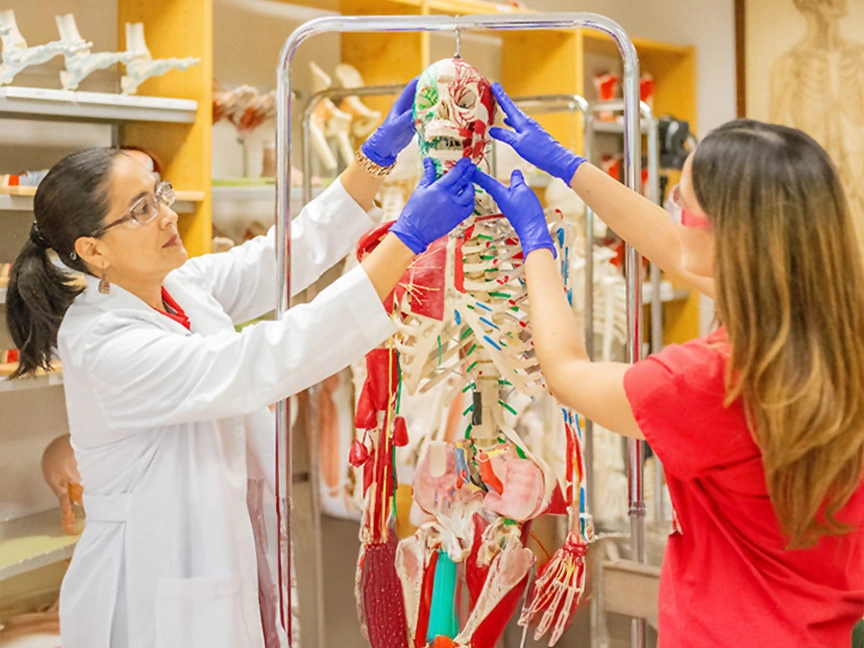
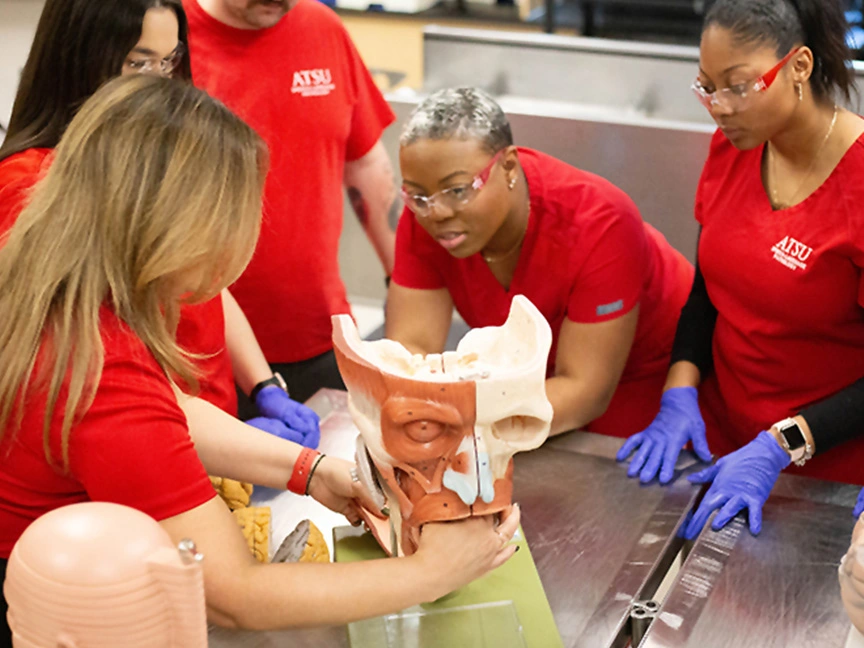
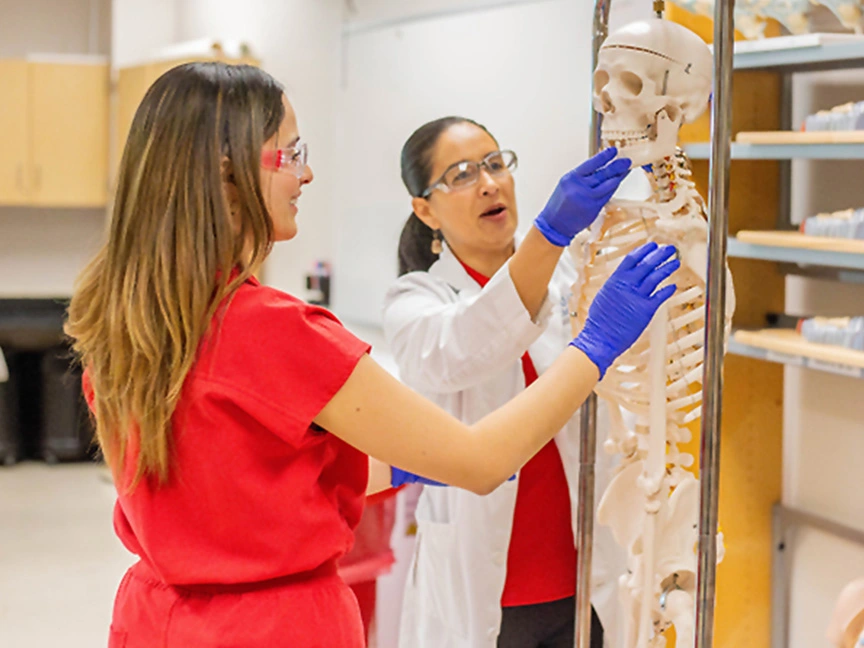
This course will use a lab-based systems approach to understand structure-function relationships of human tissue and organ systems related to the field of speech-language pathology. Students will locate structures on the human brain, head and neck specimens to explain neuropathologies that lead to communication and swallowing disorders.
2 Credits
This course will discuss theoretical issues related to neurogenic disorders, differential diagnosis, and treatment of adult neurogenic language and speech disorders including aphasia, right hemisphere disorders, and related disorders. Discussion of acquired neurological disorders will include symptomatology, etiology, management, prognosis, and recovery.
2 Credits
This course includes current theoretical models on the nature of language disorders in school-age children and adolescents. Methods of assessment and intervention of language and literacy disorders are key elements of the course.
2 Credits
This course will provide students with experience in treatment planning for children and adults with identified communication disorders, including deficits in speech, language, swallowing, social and cognitive skills. Students will learn to implement evidence-based methods for each client, family preferences for treatment methods, and cultural and linguistic responsive practices.
1 Credit
This clinical off-campus rotation will provide clinical experiences with preschool or school-age children. Students will be supervised by a local speech-language pathologist at a school, private practice or by an SLP faculty member at a designated facility. Practicum includes screening, diagnostic, treatment, and management services either in-person or via telepractice. Students will attend weekly clinical forum meetings and gain clinical hours.
Prerequisites: SPCH 5150 and SPCH 5160
Spring semester
SPCH 5310 - Assessment & Treatment of Dysphagia3 Credits
This course will include anatomy and physiology of swallowing, etiologies of dysphagia and assessment and intervention techniques. Advanced study includes discussion of ethical and professional issues when serving infant to geriatric populations with swallowing and feeding disorders.
1 Credit
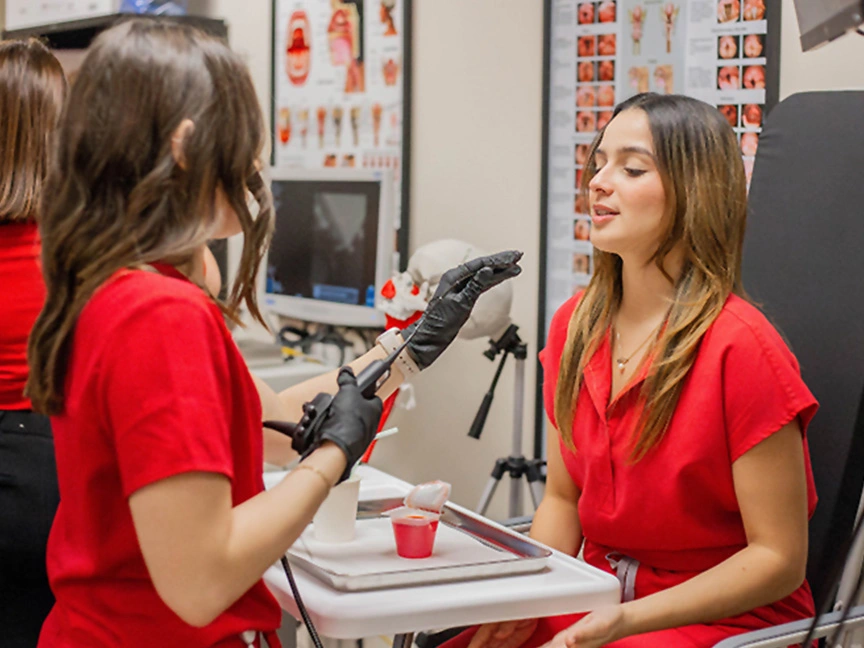
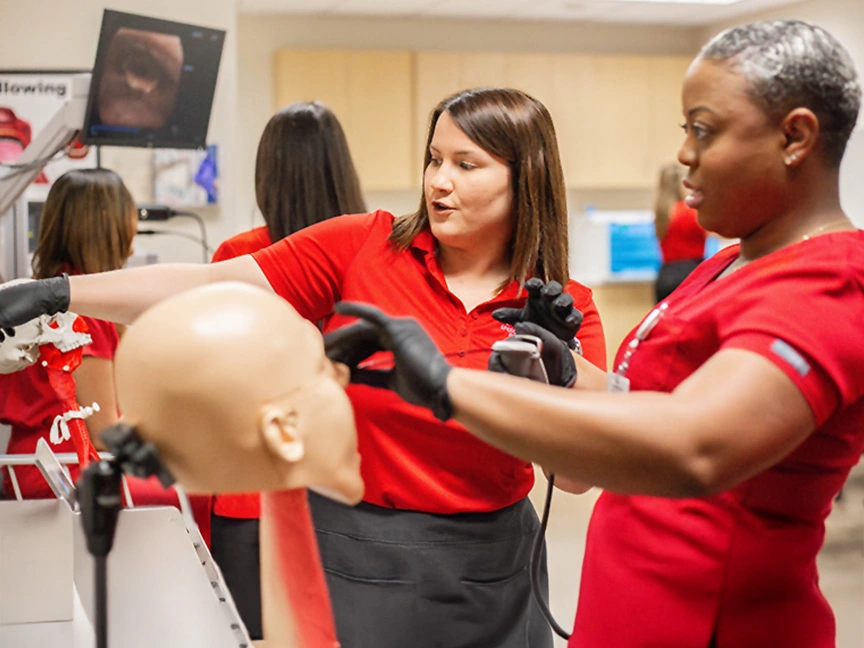
This lab will focus on the study of the instruments used in evaluations and treatments in speech-language pathology practice. Students will have the opportunity to use communication sciences and disorders principles for decision-making and evidence-based practice.
2 Credits
This course will focus on the study of the anatomy, pathophysiology, etiology, acoustics, and perception of abnormal voice production. It also includes foundational skills for prevention, assessment, differential diagnosis, and management of voice disorders in children and adults.
2 Credits
This course will equip students with the necessary skills to effectively apply evidence-based practices in clinical settings. Students will delve into crucial topics related to clinical inquiry, including the formulation of PICO (Patient, Intervention, Comparison, Outcome) questions, the assessment of existing clinical guidelines, and the critical analysis and synthesis of research articles.
1 Credit
This continuation of clinical off-campus rotation will provide additional clinical experiences with preschool or school-age children. Students will be supervised by a local speech- language pathologist at a school, private practice or by an SLP faculty member at a designated facility. Practicum includes screening, diagnostic, treatment, and management services either in-person or via telepractice. Students will attend weekly clinical forum meetings and gain clinical hours.
2 Credits
This course will review the effects of hearing loss on communication. Content will include assessment and management of speech and language disorders related to hearing loss across the life span in various clinical contexts.
2 Credits
This course will focus on the study of motor speech disorders including dysarthria and apraxia in children and adults. The unique aspect of the course is the focus on interprofessional collaboration in decision-making to address motor speech disorders. A course project designed to integrate interprofessional practice in a clinical setting with other healthcare professionals will be completed in SPCH 5440 Capstone I: IPP/ IPE Project.
3 Credits
This course will center on the study of adult neurogenic disorders, focusing on cognitive communication disorders including disorders related to dementia, traumatic brain injury, executive function disorders and other related disorders. Course topics include: theoretical issues, neurogenic bases, definitions, symptomatology, etiology, prognosis, recovery, differential diagnosis, treatment and ethical issues.
1 Credit
Guided by an SLP faculty member, students will engage in an IPE activity through a large group or small group activity in collaboration with students in any of the Schools (Health Sciences, Dentistry, Medical School), complete a literature review and write a clinical report detailing the findings of the activity and their importance to management of a client with a motor speech disorder.
2 Credits
This continuation of clinical off-campus rotation will provide additional clinical experiences in schools and/or in healthcare settings (i.e. skilled nursing facility, long term care facility and hospitals) with children and adult populations. Students will be supervised by a local speech-language pathologist at a healthcare facility or school. Practicum includes screening, diagnostic, treatment, and management services either in-person or via telepractice. Students will attend weekly clinical forum meetings and gain clinical hours.
0 Credits
This is the first of two workshop courses to guide students through review of important topics and introduce them to the mock test for the Praxis Examination in Speech-Language Pathology (SLP).
Regular track
SPCH 5410 - Telepractice Methodology2 Credits
This course provides learners with an introduction and description of procedures relevant to the delivery of effective and evidence-based services via telepractice. This course will review the policies and procedures for telepractice service delivery as well as implement telepractice methods and the application of technology.
Thesis track
ASHS 6400 - Methods of Data Analysis3 Credits
The purpose of this course is to provide students with a survey of concepts, knowledge, and tools related to the different methods of data analysis. An understanding of data analysis is essential for modern healthcare professionals, particularly within the context of evidence-based practice and the critical appraisal of the published literature.
1 Credits
This course encompasses the student’s preparation and implementation of the master’s thesis, including the oral presentation(s) as part of the student’s defense. This course is graded as pass/fail.
Industry-leading SLP faculty
ATSU faculty for the Master of Science in Speech-Language Pathology (SLP) program are all experts in the speech-language pathology field and provide responsive and engaged support to all SLP students. Our faculty maintains a rigorous curriculum that offers SLP students entry to the speech-language pathology profession and fosters lifelong learning.
Hear from our leadership and faculty
Tuition and expenses
Tuition and fees for the Master of Science in Speech-Language Pathology (SLP) program are designed to cover the cost of high-quality education and essential student services. In addition to tuition, students are responsible for a student technology fee, which helps support access to critical student resources. Tuition rates and fees are subject to change, please review the tuition and fees breakdown for the most up-to-date information.
Financial aid
Investing in your future as a student is one of the most important steps you will take. ATSU can help you create a financially sound aid package that will let you focus on your education instead of worrying about how you will finance it. To learn more about your options visit Enrollment Services or contact them at enrollmentservices@atsu.edu or call 660.626.2019.
Admissions
Applicants for admission to the residential Master of Science in Speech-Language Pathology program must meet the following requirements prior to matriculation. Candidates accepted for admission to the ATSU-ASHS Speech-Language Pathology program must have earned a baccalaureate degree or higher from a regionally accredited college or university.
All pre-requisite coursework and the bachelor’s or master’s degree must be completed from a regionally accredited institution.
Admissions timeline and CSDCAS
Applications must be submitted through the Communication Science and Disorders Centralized Application Service (CSDCAS). Please refer to the CSDCAS application instructions for specific details about completing the application, required documents, and processing time.
The CSDCAS application cycle begins in mid-July of the academic year preceding the year in which the applicant plans to matriculate. Applicants must submit a completed application to CSDCAS by the deadline listed on CSDCAS.
There will be 40 students admitted into the class. Applicants are encouraged to apply early. Students will be admitted on a rolling admissions schedule. Students may be requested to complete an interview on the Mesa, Arizona, campus or a virtual interview. Admission to the program is made based on multiple criteria.
Applicants are required to submit two (2) letters of recommendation, preferably from faculty who know and can comment on your academic ability and potential for success in graduate study. These letters are to be sent through the CSDCAS recommender portal in the Supporting Information and Evaluations section. Please refer to the CSDCAS application instructions for specific guidelines and requirements for submitting letters of recommendation.
Once ATSU-ASHS receives a completed Speech-Language Pathology application and determines that minimum requirements are met, the application is forwarded to the program for consideration.
NOTE: Applicants are responsible for notifying the Office of Admissions of any changes in their mailing address or email address. All requests for withdrawing an application must be done in writing via email, fax, or letter.
Applicants are encouraged to check all email folders in the rare event our email is filtered into a spam or junk mail folder.
If you are accepted into ATSU-ASHS’s Speech-Language Pathology Program, you will be required to complete a criminal background check before matriculation. Depending on the nature of the incidents uncovered, the results of the background check could potentially affect your acceptance into the program, disqualify you from clinical rotations in certain locations leading to an inability to complete your education, or prohibit professional licensure in certain states.
All students are required to demonstrate proficiency in English when applying to the ATSU-ASHS. You may find information on the methods by which you can demonstrate your English Proficiency in the General Admissions section.
International Admissions Requirements
GPA requirements
GPA options are as follows: a. The applicant must have achieved a minimum 3.0 cumulative grade point average overall or b. minimum of 3.0 cumulative grade point average for the last 60 credits or c. if under a minimum of 3.0 cumulative grade point average for the last 60 credits there may be special considerations for a holistic approach.
Advanced standing
No advanced standing is provided.
Technology requirements
Students are required to own a laptop computer for coursework by the first day of orientation. All coursework requires extensive computer usage. Although ATSU does not require any specific model or brand of computer, click here for the minimum specifications you will need by viewing the section for the Arizona School of Health Sciences – Residential.
Accepted applicants will be provided laptop specifications. Please note these are minimum specs, not recommended specs and that you can use either the Windows or Mac platform. Any reputable business that sells computers can advise you on these specifications.
For students using financial assistance, the financial aid budget provides $1,500 toward the purchase of a laptop. You will not receive these funds until matriculation.
Pre-requisite general knowledge coursework
Students must have three (3) semester credit hours in each of the following areas: biological science, physical science, statistics and social/behavioral sciences for the American Speech-Language-Hearing Association's (ASHA) Certificate of Clinical Competence (CCC) requirements.
- Biological Science (Human Biology)
- Physical Science (Physics or Chemistry)
- Social/Behavioral Science (Psychology, Sociology or Anthropology)
- Statistics (Math, Biology or Psychology)
Pre-requisite speech-language pathology discipline specific coursework -highly recommended but not required
At least three (3) semester credit hours in each of the suggested courses.
- Introduction to communication disorders
- Normal speech and language development
- Anatomy and physiology of the speech and hearing mechanism
- Speech and hearing science
- Phonetics
- Introduction to audiology
- Articulation and phonological disorders
- Language disorders
- Neuroscience of communication disorders
The ATSU-ASHS Speech-Language Pathology program participates in the Communication Science and Disorders Centralized Application Service for Speech-Language Pathology (CSDCAS). CSDCAS provides a web-based service that allows applicants to submit a single application to multiple participating speech-language pathology programs. All official transcripts and letters of reference are sent directly to CSDCAS as part of the application process. Please visit CSDCAS.
APPLY NOWCareers and student outcome data
Students will be prepared to serve as professionals who are committed to excellence in the delivery of services to individuals with speech, language, and swallowing disorders and to the advancement of the scientific foundations of the profession using evidence-based clinical practices. Graduates of the ATSU-ASHS Speech-Language Pathology Program will become the next generation of scholars and leaders who will make a global impact.
On-time program completion rate (2-year time frame)
| Period | # Completed within expected time frame | % Completed within expected time frame |
|---|---|---|
| 2025-26 | 26 | 100% |
| 2024-25 | 32 | 100% |
| 2023-2024 | 23 | 93% |
| 3-Year average | 81 | 98% |
Praxis examination pass rates*
| Reporting period | # Taking exam | # Passed exam | % Passed exam rate |
|---|---|---|---|
| 2025-26 | 23 | 23 | 100% |
| 2024-25 | 25 | 25 | 100% |
| 2023-24 | 22 | 22 | 100% |
| 3-Year average | 70 | 70 | 100% |
*The Praxis is the national examination administered by ETS and required by most states for speech-language pathology licensure.
SLP students and alumni
When you gain entry to Master of Science in Speech-Language Pathology (SLP) program, you are joining a collective dedicated to whole person healthcare and the advancement of the speech-language pathology profession. Connect with our students, alumni, and faculty to hear how their experiences with ATSU propelled their careers.
Voices of the ATSU SLP program
Students and alumni share the moments that shaped their experience at ATSU. Explore how the program supports professional growth, leadership development, and meaningful career outcomes.

SLP Life Moments
Our students and alumni share how ATSU’s program is empowering their practice.
Speech-language pathology program FAQs
Graduating students receive a master of science (MS) degree in speech-language pathology.
ATSU-ASHS’s SLP program is approximately 23 months in length. Courses will begin annually in the second week of July. The first 12-month component of the program is divided into two semesters of didactic, clinical rotations, and laboratory work, while the second 12-month component consists of clinical rotations and didactic work.
Please refer to the curriculum.
No. ATSU-ASHS does not offer undergraduate courses for the general knowledge or discipline specific prerequisites.
Academic classes are held in the late afternoon and evenings. Clinical practicums occur throughout the day.
Yes.
Accreditation
A.T. Still University of Health Sciences is accredited by the
Higher Learning Commission
230 S. LaSalle Street, Suite 7-500,
Chicago, IL 60604
Phone: 800.621.7440
Fax: 312.263.7462
Email:
info@hlcommission.org
Web:
hlcommission.org
The Master of Science (MS) education program in speech-language pathology (residential) at A.T. Still University-Arizona School of Health Sciences is accredited by the Council on Academic Accreditation in Audiology and Speech-Language Pathology of the American Speech-Language-Hearing Association, 2200 Research Boulevard, #310, Rockville, MD 20850, 800-498-2071 or 301-296-5700.
Degree-granting authority for the Arizona School of Health Sciences has been given by the Arizona State Board for Private Postsecondary Education, 1400 West Washington Rd., Room 260, Phoenix, AZ 85007. Phone 602.542.5709.