QUICK LINKS:
Overview Curriculum Faculty & staff Tuition Admissions Careers & outcomes Student experience FAQs AccreditationA next-gen pathway to a career in athletic training
The Master of Athletic Training (MAT) program at A.T. Still University (ATSU) prepares students for a meaningful, sustainable career in athletic training. Designed for those seeking flexibility, community connection, and real-world preparation, this graduate degree in athletic training provides a supported pathway to becoming a Certified Athletic Trainer for both recent graduates and those pursuing a new phase of their professional career. ATSU’s Master of Athletic Training program is preparing the next generation of athletic trainers through a healthcare-centered, competency-based approach that aligns with the demands of modern practice.

ONLINE DIDACTIC
COURSEWORK

IN-PERSON M.A.T.
WEEKENDS

COMPETENCY-
BASED EDUCATION

IMMERSIVE CLINICAL
EXPERIENCES

SUBSCRIPTION-
BASED TUITION

MAT program details
This professional master’s in athletic training leads to eligibility for the Board of Certification (BOC) examination and establishes a strong foundation for a career as a skilled, compassionate healthcare professional. Delivered in a hybrid online format, the program begins with a foundational phase of online didactic coursework, supported by periodic in-person mentoring and training weekends on the Mesa, Arizona campus. Students then complete a full year of immersive clinical education with practicing athletic training preceptors across diverse settings. The program’s linear, competency-based curriculum emphasizes mastery of clinical reasoning, patient care, and professional judgement, preparing graduates to deliver high-quality, evidence-informed care.
ATSU’s Master of Athletic Training (MAT) program uses a flexible, hybrid online model that integrates structured asynchronous coursework, weekly live sessions with faculty, and periodic in-person Mentoring, Assessment, and Training (MAT) Weekends on ATSU’s Mesa, Arizona campus. This design supports consistent engagement, hands-on skill development, and preparation for the immersive clinical phase. Students are supported by a coordinated network of faculty mentors, clinical preceptors, and alumni who contribute to academic progression, clinical readiness, and the transition into professional practice.
The hybrid online format allows students to integrate real-world experiences into their learning while developing critical clinical reasoning, decision-making, and leadership abilities. Graduates are prepared to manage the full spectrum of patient needs and serve as competent, adaptable professionals. Discover how our course sequence supports your growth from student to clinician.
Mentoring, assessment, and training weekends (MAT Weekends) are in-person, hands-on learning opportunities for students enrolled in the Master of Athletic Training program. Held on ATSU’s Mesa, Arizona campus, these weekends provide students with direct access to faculty for guided instruction, practice, and evaluation of psychomotor and clinical skills. During MAT Weekends, students demonstrate mastery of specific competencies required to progress to the clinical phase of this entry-level master’s in athletic training program. During the foundational phase, students attend up to six MAT Weekends based on their individual learning needs.
With five Regional Clinical Education Hubs located in Phoenix, AZ; Santa Clara, CA; Chicago, IL; Atlanta, GA; and Boston, MA, ATSU’s Master of Athletic Training (MAT) program offers flexible learning while maintaining strong community connections and academic rigor. This structure allows students to complete immersive athletic training clinical experiences at one of the Regional Hubs, supported by faculty mentors and preceptors who ensure continuity, belonging, and high-quality clinical education. Students become part of a supportive professional community within ATSU’s long-standing tradition of whole person healthcare education. Learn more about your athletic training clinical experience options.
MAT program purpose
The purpose of the ATSU Master of Athletic Training (MAT) program is to develop athletic training professionals who deliver high-quality, patient-centered care through a foundation of whole person healthcare, evidence-based practice, clinical reasoning, and cultural proficiency. The program exists to meet the evolving health needs of diverse populations by equipping students to practice at the top of their credential in a variety of clinical settings.
MAT program mission
The mission of the ATSU Master of Athletic Training (MAT) program is to deliver competency-based, learner-centered education that prepares athletic trainers to practice at the top of their credential. Through evidence-informed instruction and immersive clinical experiences, the program develops culturally proficient clinicians who deliver high quality patient-centered care, improve patient outcomes, and advance health equity across diverse populations.
ATSU mission
A.T. Still University of Health Sciences serves as a learning-centered university dedicated to preparing highly competent professionals through innovative academic programs. The University is committed to continuing its osteopathic heritage and focus on whole person healthcare, scholarship, community health, interprofessional education, diversity, and underserved populations.
ATSU-ASHS mission
The mission of A.T. Still University’s Arizona School of Health Sciences is to graduate health professionals highly skilled in evidence based practice who are committed to reducing health disparities for individuals and communities.

AT Life Moments
Our students and alumni share how ATSU’s program is empowering their practice.
Upcoming events
Connect with our athletic training faculty at any of these upcoming conferences! Or, join one of our live virtual information sessions to learn more about the athletic training curriculum, faculty, admissions process, tuition, and more.
Systems-based curriculum for whole person care
ATSU’s Master of Athletic Training (MAT) program offers a healthcare-forward curriculum designed to prepare students for the evolving demands of athletic training practice. Grounded in a systems-based approach, the program balances foundational musculoskeletal and orthopedic care with expanded learning in non-orthopedic systems and general medical conditions. Taught by experienced faculty and clinical experts, the curriculum equips students with the knowledge and skills needed to manage diverse patient populations across multiple clinical settings. See the difference in ATSU’s Master of Athletic Training curriculum.
Curriculum overview:
Foundational courses: 32
Clinical courses: 32
Total credit hours: 64
Master of Athletic Training courses
The coursework is designed to offer flexibility, focused on developing clinical reasoning, decision-making skills, and professional practice patterns. Faculty and staff collaborate closely with students to cultivate the professional attitudes and problem-solving skills needed for delivering optimal patient care.
A.T. Still University course offerings and descriptions are updated on an ongoing basis and are subject to change. For the most current information, please refer to the University Catalog.
Required foundations
Students build core professional knowledge and skills through foundational coursework that prepares them for entry-level athletic training practice. These foundations emphasize evidence-informed clinical decision-making, patient-centered care, effective communication, and collaboration as part of a healthcare team.
2 Credits
This course introduces students to the athletic training profession and serves as the starting point of the MAT curriculum. Students explore the historical development of athletic training, its role within the healthcare system, and the professional responsibilities associated with practice. Learners examine the BOC Practice Analysis domains as the organizing framework for athletic training practice and explore the structure and function of professional organizations such as the BOC, CAATE, NATA, and The Foundation. Emphasis is placed on credentialing pathways, including BOC certification, maintenance of competence, and state regulation, as well as the standards and ethics that guide professional practice. Students also investigate the diversity of athletic training practice settings, models of physician direction, and interprofessional collaboration. The course concludes with an emphasis on professional development through self-assessment, Athletic Training Milestones, continuing education, and post-professional opportunities. Through this course, students establish an understanding of athletic training as a regulated health profession and begin to envision their professional trajectory within it.
2 Credits
Building on an introduction to the profession, this course develops the core healthcare behaviors that underpin effective, patient-centered athletic training practice. Students learn to integrate research evidence, clinical expertise, and patient values into clinical decision making. Emphasis is placed on acquiring and appraising evidence, applying health information technology for documentation and decision support, and selecting and implementing clinical outcome measures. Learners examine quality improvement frameworks, including the Model for Improvement, STEEEP, and PDSA cycles, as tools for evaluating care and promoting practice-based learning. Attention is given to data privacy, communication standards, and professional responsibilities that support safe participation in interprofessional healthcare systems. This course establishes habits of evidence-informed practice that are reinforced throughout the curriculum.
2 Credits
As students begin to understand athletic training practice within healthcare systems, this course introduces the administrative and management principles that support safe, effective, and compliant care delivery. Students examine leadership and management roles, risk management strategies, and the development of critical policies and procedures related to medical conditions, environmental factors, incidents, and facility operations. Emphasis is placed on strategic planning, program evaluation, budgeting, and insurance systems, including considerations for appropriate medical coverage, pharmaceutical management, and healthcare delivery models. Learners also explore administrative responsibilities related to medical record documentation and policy-level compliance. Through case-based applications, students develop foundational knowledge needed to manage resources and support organizational decision making within athletic healthcare environments.
2 Credits
This course introduces foundational principles that shape how athletic trainers engage with patients as individuals within broader social and healthcare contexts. Students examine the biopsychosocial model, ethical frameworks, and legal considerations as they relate to shared decision making and patient autonomy. Emphasis is placed on communication skills, cultural competence, and the athletic trainer’s role in providing support, education, and advocacy for diverse patient populations. Learners also explore how identity, bias, and social determinants of health influence healthcare access, experiences, and outcomes. Through this course, students develop perspective and professional awareness that inform all subsequent patient interactions and clinical decision making.
1 Credit
This course develops the documentation skills that support continuity, quality, and accountability in athletic training practice. Students examine the purposes of documentation and the professional, legal, and ethical standards governing patient records. Learners apply these principles through completion of common documentation types, including initial evaluation, daily or encounter notes, discharge or transition summaries, and critical-incident documentation. Additional emphasis is placed on medical classification and coding principles, telehealth documentation, and quality assurance processes. This course equips students with documentation practices that are reinforced throughout system-based coursework and required during immersive clinical education.
3 Credits
Building on professional identity, healthcare behaviors, and patient-centered principles, this course introduces the foundational skills required for effective patient encounters in athletic training. Emphasis is placed on the Gathering Information stage of the diagnostic framework, including early clinical decision making related to triage and referral. Students learn to prepare for clinical encounters and conduct comprehensive health history interviews using structured approaches such as OLDCART and OPQRST. Instruction highlights the integration of patient-reported outcomes, culturally responsive communication, and strategies for establishing a therapeutic alliance. Learners incorporate information from social history, clinician experience, literature, and point-of-care resources, with introductory application of the ICF model and practice communicating preliminary findings. By the end of the course, students are able to gather, organize, and interpret patient information to support safe triage decisions and prepare for objective examination and diagnostic reasoning in subsequent coursework.
4 Credits
This course builds directly on foundational patient care and triage skills by developing students’ abilities in objective examination and early clinical reasoning. Emphasis is placed on the Gathering and Synthesizing stages of the diagnostic framework. Students learn to obtain and interpret vital signs, perform systematic observation and palpation, and conduct functional assessments using system-appropriate screening methods. Instruction reinforces clinical procedures and safety practices, including standard precautions, PPE, sterile technique, and post-exposure protocols. Students are introduced to laboratory and imaging studies, as well as principles of clinical reasoning, dual-process thinking, and problem representation to support preliminary diagnostic hypotheses. The course emphasizes how examination findings inform clinical decision making related to management planning, rehabilitation progression, and prevention strategies. By the end of the course, students are prepared to apply a consistent examination and reasoning process that will be expanded and refined across system-based courses.
1 Credit
This course focuses on examination and management of conditions affecting the eyes, ears, nose, throat, and related structures. Students conduct targeted health histories and perform focused physical examinations, including vision and hearing screening, ophthalmoscopy, otoscopy, nasal and oral inspection, and lymphatic assessment. Emphasis is placed on recognition of emergent presentations, differentiation of common EENT conditions, and development of patient-centered management plans. The course reinforces application of diagnostic reasoning while emphasizing appropriate escalation and interprofessional collaboration.
1 Credit
This course develops students’ abilities to evaluate and manage conditions affecting the thoracic cavity and lower-respiratory system. Students learn to obtain targeted respiratory histories and perform comprehensive chest examinations, including inspection, palpation, percussion, auscultation, and basic point-of-care testing such as pulse oximetry, peak expiratory flow, and spirometry. Emphasis is placed on integrating examination findings with clinical reasoning to recognize common respiratory conditions, identify emergent presentations, and guide initial management decisions. This course strengthens system-specific assessment and decision-making skills for respiratory concerns in physically active populations.
2 Credits
This course provides an in-depth examination of cardiovascular evaluation and management within athletic training practice. Students perform detailed cardiovascular health histories and physical examinations, applying diagnostic techniques such as inspection, palpation, and auscultation to support clinical decision making. Course content emphasizes recognition of normal versus abnormal findings, identification of red flags, and development of comprehensive care plans that incorporate patient education, therapeutic interventions, and interprofessional collaboration. Students develop clinical judgment necessary for effective cardiovascular assessment and management.
4 Credits
This course provides a comprehensive examination of musculoskeletal diagnosis and management within athletic training practice. Students apply clinically relevant musculoskeletal anatomy, tissue behavior, and mechanisms of injury to focused history taking and systematic physical examination. Emphasis is placed on identification of system-specific red flags, interpretation of examination findings, and integration of tissue-based and region-based approaches to musculoskeletal pathology. Course content addresses bone, joint, ligament, muscle, tendon, nerve, and fascial conditions across major body regions, with application of diagnostic imaging and management principles including acute care, referral decision making, activity modification, and participation considerations.
1 Credit
This course addresses diagnostic evaluation and management of neurologic conditions relevant to athletic training practice. Students apply clinically relevant nervous system anatomy and physiology to focused neurologic history taking and system-specific physical examination. Emphasis is placed on recognition of red flag findings associated with traumatic, vascular, infectious, inflammatory, seizure-related, degenerative, and functional neurologic conditions. Course content includes sport-related concussion and other traumatic neurologic injuries, along with application of institutional policies, emergency action planning, documentation standards, and participation decision making.
1 Credit
This course focuses on diagnostic evaluation, support, and management of behavioral health concerns within athletic training practice. Students examine biopsychosocial and neurobiological foundations of behavior and conduct focused, trauma-informed behavioral health histories and behavioral observation within scope of practice. Emphasis is placed on recognition of common behavioral health presentations, differentiation of situational stress responses from conditions requiring referral or emergency intervention, and identification of red flag findings. Course content includes mood, anxiety, attention, eating-related, substance-related, and crisis-related conditions, along with patient education related to health, safety, and participation risk.
1 Credit
This course focuses on diagnostic evaluation and management of gastrointestinal conditions encountered in athletic training practice. Students integrate clinically relevant anatomy and physiology with focused history taking and system-specific physical examination techniques, including observation, palpation, percussion, and auscultation. Emphasis is placed on recognition of gastrointestinal red flags, classification of common disorders, and synthesis of findings to develop differential diagnoses and initial management plans. Through case-based learning and simulation, students apply clinical reasoning while considering referral pathways, patient education, and participation decision making.
1 Credit
This course focuses on diagnostic evaluation, screening, and management considerations for the renal, urinary, and reproductive systems in athletic training practice. Students conduct focused, trauma-informed health histories and perform recognition-level examinations appropriate to scope of practice. Emphasis is placed on identification of red flag findings, interpretation of screening tools such as urinalysis and pregnancy screening, and recognition of common physiologic, infectious, inflammatory, traumatic, and neoplastic conditions of the renal, urinary, and reproductive systems. Course content addresses professional responsibilities related to institutional policies, clinical protocols, patient consent and privacy, inclusive practice, documentation, and coordination of care.
1 Credit
This course focuses on diagnostic evaluation and management of hematologic and immunologic conditions encountered in athletic training practice. Students develop skills in conducting comprehensive health histories and performing targeted physical examinations to support recognition of hematologic and immune-related concerns. Emphasis is placed on understanding etiology, identifying hallmark signs and symptoms, and recognizing red flag findings requiring escalation of care or referral. Course content supports individualized care considerations that integrate patient education, therapeutic implications, and interprofessional collaboration.
0.5 Credits
This course applies foundational examination and diagnostic reasoning skills to conditions of the integumentary system commonly encountered in athletic training practice. Students learn to conduct focused health histories and perform system-specific physical examinations for dermatologic concerns. Emphasis is placed on recognition of red flag findings, development of differential diagnoses, and implementation of appropriate management strategies within athletic training scope of practice. Course content includes the etiology, signs, and symptoms of common dermatologic conditions, infection-control principles, and return-to-participation considerations. Through this course, students develop confidence applying a consistent diagnostic approach to system-specific conditions.
0.5 Credits
This course addresses diagnostic evaluation and management of endocrine conditions relevant to athletic training practice. Students conduct focused health histories and targeted physical examinations to identify signs and symptoms of endocrine dysfunction. Emphasis is placed on recognition of common endocrine disorders, identification of acute endocrine emergencies, and interpretation of findings that inform management and referral decisions. Course content integrates patient education, therapeutic considerations, interprofessional collaboration, and policy-based decision making related to participation and return-to-play.
2 Credits
This course prepares students to recognize, diagnose, and respond to acute and life-threatening emergencies encountered in athletic training practice. Emphasis is placed on clinical decision making, rapid assessment, and timely intervention using focused emergency evaluation strategies and models of physiologic failure. Course content addresses acute and emergency care across cardiovascular, respiratory, neurologic, metabolic, thermoregulatory, traumatic, and environmental contexts. Students develop competence in Emergency Action Plan activation, team-based emergency response, airway and circulatory support, thermoregulatory intervention, hemorrhage and shock management, medication administration, and effective communication and handoff with emergency medical services. Learning experiences emphasize structured clinical scenarios and simulation-based activities to support readiness for supervised application during immersive clinical education.
Clinical tracks
The clinical phase of the program emphasizes the supervised application of athletic training skills in authentic practice settings. Through immersive athletic training clinical experiences, students work under the guidance of experienced preceptors while progressively developing clinical reasoning, professional judgment, and autonomy in patient care.
During the foundational phase of the program, students work closely with the MAT Director of Clinical Education to identify their professional goals and select the Regional Education Hub that best aligns with those goals. Students relocate to their selected hub city to complete required immersive athletic training clinical experiences during the clinical phase of the program. Students are responsible for relocation expenses and transportation to assigned clinical sites.
8 Credits Each
Professional Practice in Athletic Training I–III are immersive clinical education courses completed during the clinical phase of the program. Students engage in full-time, supervised athletic training practice across approved clinical settings, participating in direct patient care, documentation, communication, and professional responsibilities. These courses emphasize the application of knowledge, skills, and professional behaviors developed during the foundational phase of the curriculum, including both foundations and systems-based coursework. Students generate authentic clinical practice evidence through daily patient care activities, including evaluation, diagnosis, management, documentation, and interprofessional communication. Athletic Training Milestone competencies and sub-competencies serve as the primary framework for formative assessment, feedback, and coaching. Milestone attainment during these courses is developmental, with expectations for progressive responsibility, clinical reasoning, and professional independence across the clinical phase.
8 Credits
Professional Practice in Athletic Training IV is an immersive clinical education course completed during the clinical phase of the program and serves as the primary summative assessment point for confirmation of readiness for independent professional practice. Students continue full-time, supervised athletic training practice across approved clinical settings, participating in direct patient care, documentation, communication, and professional responsibilities. This course emphasizes the synthesis, curation, and evaluation of authentic clinical practice evidence accumulated throughout the clinical phase. Athletic Training Milestone competencies and sub-competencies serve as the framework for summative assessment, with students expected to demonstrate Level 3 performance across all required competencies. Successful completion of this course confirms readiness for entry-level athletic training practice and completion of the MAT program.
Industry leading athletic training faculty
Sports medicine leadership and expertise is demonstrated throughout the program, including by ATSU’s faculty and staff. Renowned faculty are recognized experts with national influence who share emerging trends and opportunities in athletic training practice and education. Interaction with a variety of instructors offers students exposure to a variety of teaching styles, healthcare- and education-related backgrounds and experiences that contribute to a well-rounded education fostering personal and professional growth.

Featured Faculty:

Featured Faculty:

Featured Faculty:

Featured Faculty:

Featured Faculty:

Featured Faculty:
Hear from our leadership and faculty

Tamara C. Valovich McLeod, PhD, ATC, FNATA, FNAK, FNAP is the Athletic Training program director, professor of Athletic Training, research professor in the School of Osteopathic Medicine in Arizona, and the John P. Wood, DO, endowed chair for Sports Medicine at A.T. Still University in Mesa, Arizona.
Dr. McLeod completed her doctor of philosophy degree in education with an emphasis in sports medicine from the University of Virginia. She is the founding director of the Athletic Training Practice-Based Research Network. Her research has focused on the pediatric athlete with respect to sport-related concussion. Her current work is investigating the short- and long-term effects of pediatric sports concussion as well as recovery following concussion on traditional concussion assessments, academics, and health-related quality of life.
Dr. McLeod is also involved with pediatric sports injury education and prevention through the Positive Play Project in conjunction with Mesa Parks and Recreation.
Dr. McLeod was a contributing author for the NATA Position Statement on the Management of Sport-Related Concussion, the lead author on the NATA Position Statement on the Prevention of Pediatric Overuse Injuries, and a consultant and contributing author on the Appropriate Medical Coverage for Secondary School-Aged Athletes. Dr. McLeod serves on numerous editorial boards, and publishes frequently in the athletic training and sports medicine journals and is a NATA Fellow.

Ann Lee Burch, PT, MPH, EdD
Dean
Dr. Ann Lee Burch is the dean of A.T. Still University’s Arizona School of Health Sciences (ATSU-ASHS). Dr. Burch received her doctor of education from Columbia University, Teachers College in 2005. She received her masters of public health from Columbia University, Mailman School of Public Health in 2002 and her masters of physical therapy from Columbia University, College of Physicians and Surgeons in 1989. She was a postdoctoral fellow with the Research Group on Health Disparities at Teachers College, Columbia University. Her BA is in psychology from the University of Rochester.
Prior to her appointment as dean, Dr. Burch served as vice dean for ATSU-ASHS. She served as the chair of the Physical Therapy Department from 2008-January 2012. Prior to ATSU, Dr. Burch was the director of physical therapy at the University of Puerto Rico, Medical Sciences Campus in San Juan, Puerto Rico. She has held administrative and/or faculty positions at the International Center for the Disabled in NY, NY, Mercy College in NY, and Long Island University in Brooklyn, NY.
Dr. Burch’s area of scholarly interest and application of that interest is in knowledge, attitudes, and self-efficacy of health care providers and healthcare professional students towards underrepresented patient/client groups.
Dr. Burch is the author of a Guide to Physical Therapy (Vault Publishers) which was written to increase information access about physical therapy to both high school graduates and re-entry adults. She was a co-investigator on an NIH grant at the University of Puerto Rico exploring the feasibility of an exercise program for breast cancer survivors living in San Juan. Dr. Burch has lived in Symi, Greece, Taipei, Taiwan, Ahmdebad, India and San Juan, Puerto Rico, and is committed to research, teaching and service that further the understanding of the impact of socioeconomic and cultural variables on health.
She was a member of the class of 2014 cohort of Women in Educational Leadership at Harvard Graduate School of Education. In 2017 she was the co-PI on a Centers for Disease Control, Association for Prevention and Teaching grant exploring a population health case study format for teaching and communicating the impact of social determinants of health on health disparities. She was recently appointed a peer reviewer for the Higher Learning Commission.

Marlene Salas-Provance, PhD, MHA, CCC-SLP
Vice Dean
Dr. Salas-Provance, is professor and vice dean of A.T. Still University’s Arizona School of Health Sciences (ATSU-ASHS). Dr. Salas-Provance received her doctorate in speech science from the University of Illinois Urbana-Champaign. She received her masters of health administration from the University of Missouri School of Medicine-Columbia. She holds both a bachelors and masters in Speech Pathology from New Mexico State University.
Prior to her appointment as vice dean, Dr. Salas-Provance served as associate dean of academic and student affairs for the School of Health Professions at the University of Texas Medical Branch Galveston. She served as assistant dean and chair in the College of Education, Department of Special Education and Communication Disorders at New Mexico State University in Las Cruces, New Mexico and department chair in the Department of Communication Sciences and Disorders at the University of Montevallo (AL). She held faculty positions at Fontbonne College and St. Louis University, in St. Louis, MO.
She has made extensive professional contributions to the American, Speech, Language & Hearing Association (ASHA), serving on the Speech-Language Pathology Advisory Council, member of the Financial Planning Board, and the Multicultural Issues Board. She served as coordinator of ASHA’s Special Interest Group (SIG) 14, Communication Disorders and Sciences in Culturally and Linguistically Diverse populations and was a founding member and coordinator of SIG 17, Global Issues in Communication Sciences and Disorders. She is an ASHA Fellow and received ASHA’s highest awards for “Special Recognition in Multicultural Affairs” and “Outstanding Contributions in International Achievement.”
Dr.Salas-Provance has served as a clinical educator throughout her academic career, especially related to children with cleft lip and palate. She is a member of an international medical team with Rotaplast International and has traveled worldwide for over 15 years to provide clinical services to children with cleft palate. She implemented a program for graduate students in speech pathology to provide clinical services in Spanish to children with cleft palate in Lima, Peru. In addition to Lima, Peru she has provided clinical services in China, Bangladesh, Philippines, El Salvador, Dominican Republic, Guatemala and Venezuela.
Dr. Salas-Provance is coauthor of the textbook Culturally Responsive Practices in Speech-Language and Hearing Science (Plural Publishing, 2019) which meets the needs for training students in healthcare professions regarding practice with individuals from culturally and linguistically diverse populations. Her research is focused on attitudes towards disability by diverse populations and addressing the use of language interpreters during healthcare and educational encounters.
Over the past ten years she has lectured extensively to international audiences, both in English and Spanish, including as invited speaker for the Congreso Internacional en Trastornos de la Comunicacion at Escuela de Fonoaudiologia (Speech Language Pathology / Audiology) de la Universidad de Talca, Chile and for the Department of Otolaryngology, Hospital Nacional Arzobispo Loayza, Lima, Peru, Endoscopic Evaluation of Velopharyngeal Dysfunction. She was invited keynote speaker for the First International Congress in Speech-Language Pathology and Orthodontics in the area of cleft lip and palate in Lima, Peru.
Dr. Salas-Provance was selected for the American Council on Education (ACE) Women’s Leadership Program and attended the National Women’s Leadership Forum in Washington DC (2017) for advancing female executives in higher education.
Core faculty

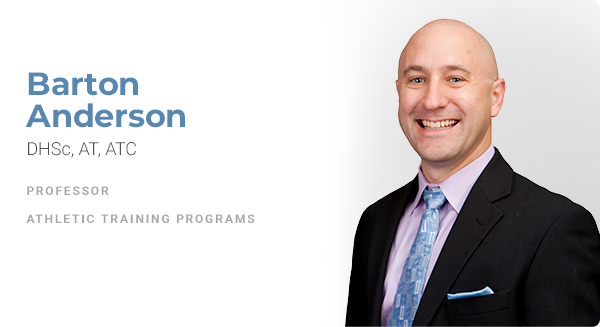
Barton E. Anderson, DHSc, AT, ATC
Director, Master of Athletic Training Program
Dr. Anderson is a Tenured Professor in the ATSU Athletic Training programs. He teaches a variety of courses in both the online DAT and MSAT programs, with a focus on developing clinical skills and athletic training clinical education Dr. Anderson also advises doctoral applied research projects in the DAT program. Dr Anderson holds a Level 1 Functional Movement Screen™ certification, and is an accredited Graston Technique™ clinician. He has extensive experience and training in therapeutic exercise prescription, fundamental movement patterns, and manual therapy techniques.
Prior to coming to ATSU, Dr. Anderson worked full-time clinically for 10 years as an athletic trainer in the collegiate, high school, and clinical settings. Dr. Anderson's research interests include the assessment and correction of fundamental movement patterns, the development of clinical reasoning skills and advanced clinical practice, and athletic training clinical education. Dr. Anderson is the Chair of the CAATE Standards Committee, and a member of the CAATE Professional Accreditation Council. He is also a member of the Association for Athletic Training Education (AATE) Research Network, and serves as a member of the editorial board for the Journal of Sport Rehabilitation. Dr. Anderson earned his Bachelor’s of Science in Sports Medicine and Athletic Training from Missouri State University, his Masters of Science in Sports Health Care from A.T. Still University, and his Doctor of Health Science degree from Nova Southeastern University. He has been recognized as the Arizona School of Health Sciences Educator of the Year (2016), Distinguished Service of the Year (2019), and Scholar of the Year (2021); named a Distinguished Educator by the RMATA in 2019, and received the NATA Service Award in 2018.

Rachel Geoghegan DAT, ATC
Director of Clinical Education
Dr. Rachel Geoghegan is the newest faculty member in the Department of Athletic Training, joining the faculty in 2023. She brings with her nearly two decades of full-time clinical experience in the college/university setting at locations across the country including Idaho State University, Gonzaga University, and Boston University. As a clinician, she boasts a contemporary clinical expertise in non-orthopedic conditions with a particular interest in female athlete health concerns and pelvic health. She originally hails from South Carolina where she earned a Bachelor of Science degree in Athletic Training from Erskine College in Due West, SC, and a Master of Human Resource Development from Clemson University in Clemson, SC. In 2020, she rounded out her education by earning her Doctor of Athletic Training degree from A.T. Still University. While new to academia, Dr. Geoghegan has experience as a clinical educator by serving as a preceptor for a number of institutions including Idaho State University, Whitworth University, University of Idaho, Washington State University, Boston University, and Chobanian and Avedisian School of Medicine. Dr. Geoghegan is also active in professional service at the local, regional, and national level and seeks to advance the profession any chance she gets. Her research interests include non-orthopedic conditions treated by athletic trainers, pelvic health among athletes, and female athlete health concerns. She is passionate about normalizing compassionate and appropriate conversations about pelvic health between athletic trainers and their patients.

Nikki Harris, DAT, LAT, ATC, CSCS
Director of Student Recruitment
Associate Professor | Faculty feature
Nicolette “Nikki” Harris, DAT, LAT, ATC, CSCS serves as an Associate Professor and the Director of Student Recruitment for the Athletic Training Programs at A.T. Still University. An alumna of the ATSU Doctor of Athletic Training (DAT) program, Dr. Harris brings a wealth of clinical experience to this role. Prior to arriving to ATSU, she spent six years as the Coordinator for Athletic Training Services for Florida International University (FIU) where she worked to enhance the health care services provided to both FIU students and campus recreation participants. In addition, she served three years as the Head Athletic Trainer at Miami Booker T. Washington Senior High school providing care to secondary school athletes during their pursuit of four State Championship Titles.
In addition to her clinical practice, she has served as a Clinical Assistant Professor and Clinical Preceptor to athletic training students. Nikki actively engages in professional service at all levels, currently sitting as the NATA Career Advancement Committee (CAC) Chair Elect, the BOC Liaison to the Athletic Training Research Agenda Committee (ATRAC) as well as a member of the CAATE Education Committee. Dr. Harris values the effects of research on practice and education and has demonstrated a commitment to the advancement of diversity, equity, inclusion, and social justice through her scholarly works.
Program faculty

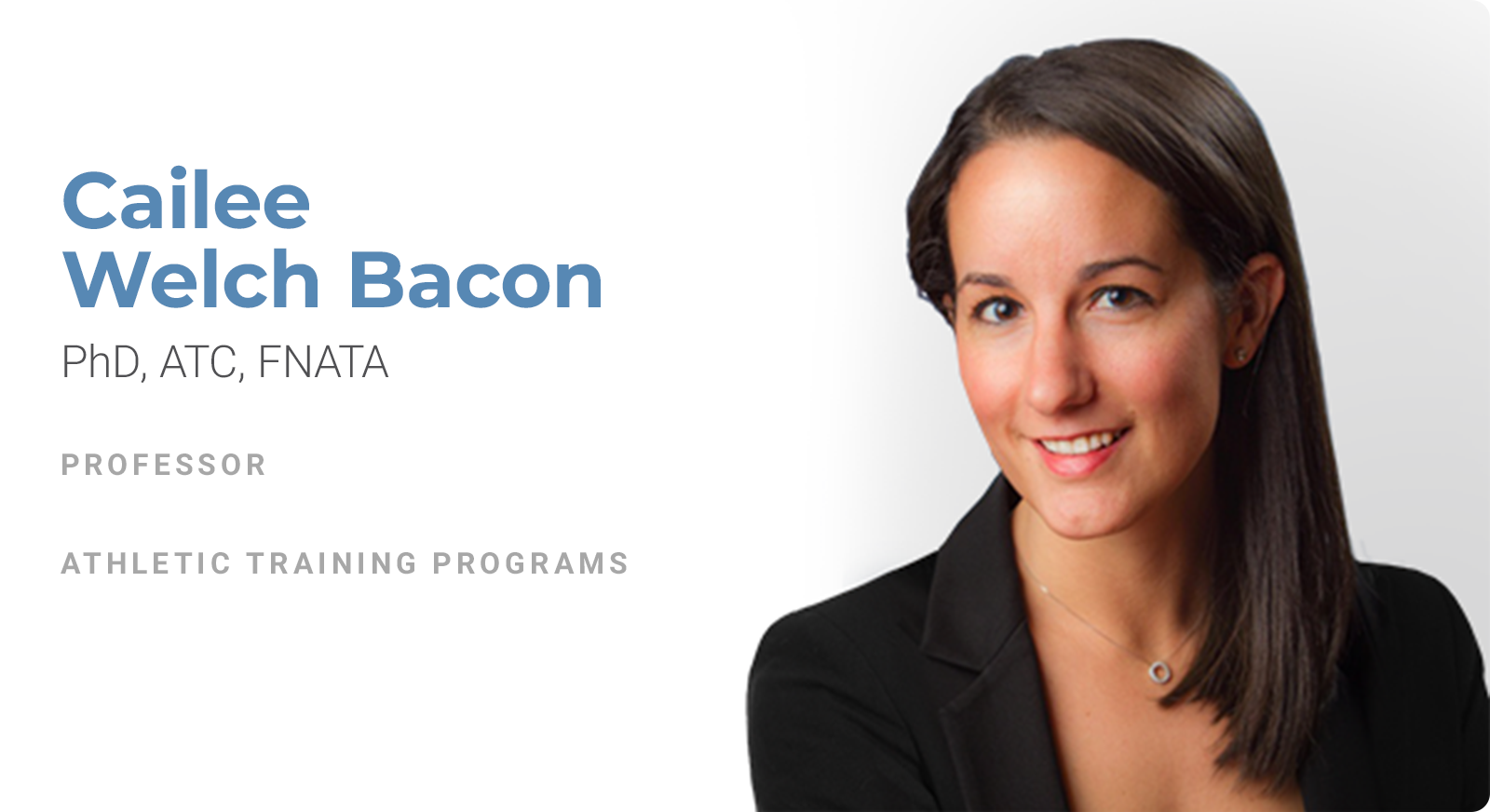
Cailee E. Welch Bacon, PhD, ATC, FNATA, FNAP is a professor in the Department of Athletic Training Programs and a research professor in the Department of Basic Science in the School of Osteopathic Medicine in Arizona at A.T. Still University. Dr. Bacon earned her bachelor of science degree in athletic training from Boston University, followed by a master of science in education degree in athletic training from Old Dominion University. She also earned her doctor of philosophy degree in human movement science with a focus in athletic training curriculum and instruction from Old Dominion University, where she investigated the effectiveness of educational techniques to aid athletic trainers in learning the fundamentals of evidence-based practice. Dr. Bacon completed a post-doctoral research fellowship within the Center for Clinical Outcome Studies at A.T. Still University, which focused on patient-oriented outcomes. Dr. Bacon serves as an Associate Editor for the Journal of Athletic Training Editorial Board and the Athletic Training Education Journal, and is a contributing scholar for the Association for Athletic Training Education Research Network. Dr. Bacon also serves as the Associate Director for the Athletic Training Practice-Based Research Network (AT-PBRN), where she primarily oversees the continuing education platform and the cost-free academic electronic medical record (AEMR). Dr. Bacon’s research agenda seeks to understand how the educational outcomes of health professions education programs shape and guide the practice patterns of healthcare professionals. The long term goal of her research is to determine key elements that drive the successful educational outcomes of professional and post-professional athletic training programs to ensure future generations of athletic trainers are able to effectively provide athletic training services to enhance patient outcomes and reduce healthcare costs. In 2023, Dr. Bacon was named a Fellow of the National Athletic Trainers’ Association.

Kellie C. Huxel Bliven, PhD, ATC
Chair
Professor
Kellie C. Huxel Bliven, PhD, ATC, is a professor of clinical anatomy in the Department of Interdisciplinary Health Sciences and ATSU-ASDOH. Since joining ATSU in 2008, Dr. Bliven has been a faculty member in various programs, including anatomy, kinesiology (formerly human movement), and athletic training. Prior to her appointment at ATSU, Dr. Bliven was a faculty in the athletic training department at Indiana State University. Dr. Bliven’s current line of research on understanding and improving shoulder function and health addresses four areas: mechanisms of shoulder stability, muscle activation during rehabilitation, adaptations in the throwing shoulder, and health-related quality of life in throwing athletes. In addition to her faculty responsibilities, Dr. Bliven serves as the director of the Interdisciplinary Research Laboratory and as the vice chair of the Institutional Review Board at ATSU Mesa campus. She is also involved in professional service, including the Board of Certification for the Athletic Trainer exam development committee, associate editor of the Journal of Sport Rehabilitation, and active member in the American Society of Shoulder and Elbow Therapists. Dr. Bliven received her bachelor’s degree in biology and physical education from Denison University in Granville, Ohio; master’s degree in kinesiology from Indiana University in Bloomington, Indiana; and doctoral degree in kinesiology with an athletic training emphasis from Temple University in Philadelphia.

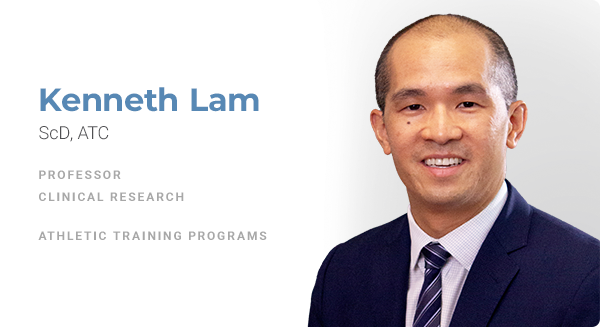
Kenny Lam, ScD, ATC, FNATA is a professor of clinical research within the Department of Interdisciplinary Health Sciences at A.T. Still University (ATSU). He received a bachelor of science in athletic training and a master of education in human movement from Boston University. He also completed his doctor of science degree from Boston University with a focus on movement sciences. Prior to becoming a faculty member at ATSU, Dr. Lam completed a Post-Doctoral Research Fellowship within the Center of Clinical Outcomes Studies at ATSU with a focus on patient-oriented outcomes research. His current line of research seeks to understand the overall impact of sport-related lower extremity injuries on patient-oriented outcomes such as health-related quality of life. In addition to his faculty responsibilities, Dr. Lam serves as the director of the Athletic Training Practice-Based Research Network (AT-PBRN) and as the vice chair of the Institutional Review Board at ATSU - Mesa campus. He also serves as a member of the Research Committee for the NATA Foundation, a member of the Athletic Training Research Committee of the NATA Foundation, and an editorial board member for the Journal of Athletic Training and Journal of Sport Rehabilitation. In 2022, Dr. Lam was named a Fellow of the National Athletic Trainers’ Association. Prior to earning his doctorate, Dr. Lam practiced as a certified athletic trainer at Boston University, Rutgers University - New Brunswick, and the Massachusetts Institute of Technology.
Tamara C. Valovich McLeod, PhD, ATC, FNATA, FNAK, FNAP is the Athletic Training program director, professor of Athletic Training, research professor in the School of Osteopathic Medicine in Arizona, and the John P. Wood, DO, endowed chair for Sports Medicine at A.T. Still University in Mesa, Arizona.
Dr. McLeod completed her doctor of philosophy degree in education with an emphasis in sports medicine from the University of Virginia. She is the founding director of the Athletic Training Practice-Based Research Network. Her research has focused on the pediatric athlete with respect to sport-related concussion. Her current work is investigating the short- and long-term effects of pediatric sports concussion as well as recovery following concussion on traditional concussion assessments, academics, and health-related quality of life.
Dr. McLeod is also involved with pediatric sports injury education and prevention through the Positive Play Project in conjunction with Mesa Parks and Recreation.
Dr. McLeod was a contributing author for the NATA Position Statement on the Management of Sport-Related Concussion, the lead author on the NATA Position Statement on the Prevention of Pediatric Overuse Injuries, and a consultant and contributing author on the Appropriate Medical Coverage for Secondary School-Aged Athletes. Dr. McLeod serves on numerous editorial boards, and publishes frequently in the athletic training and sports medicine journals and is a NATA Fellow.

Kelsey Picha, PhD, AT
Associate Professor
Kelsey Picha, PhD, AT, is an assistant professor of clinical anatomy in the Department of Interdisciplinary Health Sciences. Dr. Picha earned her bachelor of athletic training degree from Minnesota State University, Mankato, followed by a master of science degree in post-professional athletic training from A.T. Still University (ATSU). She also earned her doctor of philosophy degree in rehabilitation sciences from the University of Kentucky, where she worked as a research assistant in the Sports Medicine Research Institute. During her time at the University of Kentucky, she investigated patient adherence and self-efficacy for home exercise programs. Dr. Picha completed a post-doctoral research fellowship within Research Support at ATSU, which focused on patient-oriented outcomes. Dr. Picha currently serves on the Governmental Affairs Committee through the Arizona Athletic Trainers Association, the Education Advancement Committee through the National Athletic Trainers Association, the Brand Promotion and Outreach Committee through American Association of Clinical Anatomists, and serves as an editorial board member for the Journal of Sports Rehabilitation. Her research interests are in the areas of the patient adherence to rehabilitation and social determinants of health in athletic healthcare.

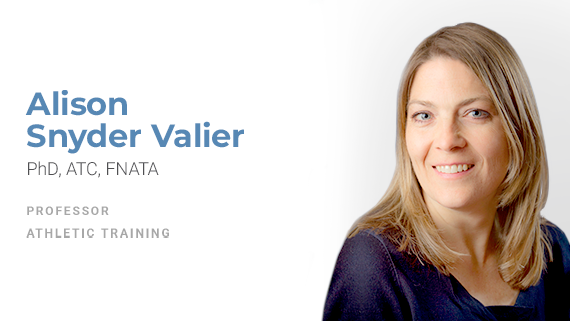
Alison Snyder Valier, PhD, ATC, FNATA
Assistant Director of Research Support Faculty feature
Alison Snyder Valier, PhD, ATC, FNATA, holds the positions of Professor within the Department of Athletic Training and Assistant Director of Research Support at A.T. Still University (ATSU). She received her bachelor of arts degree in psychology from Whitman College in Washington and a master of science degree in exercise physiology at the University of Toledo in Ohio. In addition, she received her doctorate in exercise science from the University of Toledo, where she majored in applied physiology and completed a minor in human anatomy. Dr. Valier completed a Post-Doctoral Research Fellowship in Clinical Outcomes Research, awarded to her by the NATA Research and Education Foundation. She is actively involved in the instruction of students enrolled in the Post-Professional Masters in Athletic Training and the Doctor of Athletic Training programs at ATSU. Alison's extensive research proficiency encompasses Clinical Outcomes Assessment, with a distinct emphasis on leveraging Patient Reported Outcomes Instruments to facilitate informed clinical decision-making. Her scholarly pursuits also span social determinants of health and their impact on individuals leading physically active lives, epidemiology of athletic injuries, and enhancing healthcare quality. Throughout her career, Alison has demonstrated a dedicated commitment to the advancement of the Athletic Training field. Her contributions include holding pivotal roles such as Chair of the NATA Foundation Pronouncements Committee and membership in the NATA Foundation Research Committee. She has also served as a reviewer for the Journal of Athletic Training, Athletic Training and Sports Health Care, and the Journal of Sport Rehabilitation. Dr. Valier has been recognized for her outstanding contributions to the field of Athletic Training, earning her the distinction of being named a Fellow of the National Athletic Trainers’ Association in 2022.

Kaylynn Schmitt
Program Manager
Kaylynn Schmitt is the program manager for the Department of Interdisciplinary Health Sciences. Ms. Schmitt brings over 5 years of administrative and clerical experience to our program. She assists the program director, faculty and administrative manager with the administration responsibilities for both the Doctors in Athletic Training and Masters in Athletic Training programs.
Delma Luna
Administrative Assistant
Delma Luna is the Administrative Assistant for the Department of Athletic Training and the Department of Interdisciplinary Health Sciences. She has been at ATSU since October 2025. She earned her Bachelor of Science in Math from Whitworth University in Spokane, Washington. Delma has worked in higher education for the last 10 years, assisting federal grant programs and academic departments.
Tuition and fees
Tuition and fees for the Master of Athletic Training (MAT) program are designed to cover the cost of high-quality education and essential student services. In addition to tuition, students are responsible for a student technology fee, which helps support access to critical student resources. Please note that tuition rates and fees are subject to change, please review the tuition and fees breakdown for the most up-to-date information.
Financial services
Investing in your future as a student is one of the most important steps you will take. ATSU can help you create a financially sound aid package that will let you focus on your education instead of worrying about how you will finance it. To learn more about your options, visit Enrollment Services or contact them at enrollmentservices@atsu.edu or call 660.626.2019.
Admissions
A.T. Still University’s Master of Athletic Training (MAT) program welcomes applicants from diverse academic and personal backgrounds who are preparing to enter the athletic training profession. Admission is selective and considers the overall qualities of each applicant, including academic preparation, application materials, and relevant experiences that demonstrate readiness for rigorous graduate study. The program cohort begins each year in mid-July, and applications are reviewed on a rolling basis until the cohort reaches capacity.
Applicants to the MAT program must submit their application through the Athletic Training Centralized Application System (ATCAS), which allows candidates to apply to multiple participating AT programs with a single application. Official transcripts are required as part of the process. For more information on how to apply, please visit the ATCAS website.
Applications are submitted through the Athletic Training Centralized Application Service (ATCAS). A secondary application is not required. Candidates accepted for admission must demonstrate and/or submit documentation of the following prior to matriculation:
- Candidates accepted for admission to the MAT program must hold a post-secondary degree from a regionally accredited institution. Degrees in healthcare or science related fields preferred.
- Candidates must have achieved a minimum overall cumulative GPA of 2.75 (on a 4.0 scale).
- Candidates must provide official transcripts from all institutions where a degree was conferred.
Please note that ATCAS does not accept transcripts from Sophia Learning. - Before matriculation, candidates must demonstrate prerequisite content knowledge in the following areas, typically through undergraduate/graduate coursework or equivalent academic preparation:
- Biology (3–4 credits)
Foundational concepts related to cellular structure and function, genetics, homeostasis, adaptation, and biological processes relevant to human health and performance. - Chemistry (3–4 credits)
Foundational concepts related to atomic and molecular interactions, chemical reactions, solutions, metabolism, energy transfer, and biochemical principles relevant to human physiology and healthcare. - Human Anatomy (3–4 credits)
Foundational understanding of gross human anatomy, musculoskeletal structures, neurovascular anatomy, anatomical relationships, and regional anatomy relevant to movement and clinical examination. A laboratory component is required. Cadaver-based anatomy experiences are recommended but not required. - Physiology (3–4 credits)
Foundational understanding of human physiological systems, including cardiovascular, respiratory, neuromuscular, endocrine, and metabolic function, as well as physiological responses to activity and recovery. This requirement may be satisfied through a standalone physiology course or an Anatomy and Physiology sequence. - Physics or Biomechanics (3–4 credits)
Foundational understanding of force, motion, energy, mechanics, tissue loading, and principles related to human movement, rehabilitation, and performance. - Psychology (3 credits)
Foundational understanding of human behavior, cognition, motivation, development, stress, adaptation, and psychosocial factors influencing health and patient care. - Statistics (3–4 credits)
Foundational understanding of descriptive statistics, probability, hypothesis testing, data interpretation, and statistical concepts relevant to healthcare and evidence-based practice.
- Biology (3–4 credits)
- One official recommendation form must be completed by an academic advisor, professor, employer, or professional colleague who can attest to the applicant’s potential for success in the master’s program. Letters from an educational consulting service will not qualify.
- Candidates must complete an online interview with the program director or a core faculty member following submission of their application.
- Candidates are expected to be computer literate and experienced in word processing. All curricula require extensive computer usage. Accepted applicants are required to have regular access to a personal computer prior to matriculation and have access to a high-speed internet connection.
- Applicants are required to demonstrate proficiency in English when applying to the Arizona School of Health Sciences, A.T. Still University. Written and spoken proficiency in the English language may be demonstrated by one of the following
options:
- Option 1- English is your first language.
- Option 2 - Graduated from a regionally accredited four year university or college in the United States (minimum BA or BS).
- Option 3 - You are demonstrating your English proficiency by submitting acceptable scores on the Test of English as a Foreign Language (TOEFL) or the International English Testing Service (IELTS).
- TOEFL iBT Scoring (after January 2026): 4.0 Total | 4.0 Reading | 4.5 Writing
- Acceptable IELTS scores are an overall band score of 6.5
- TOEFL iBT Scoring (before January 2026): 80
MAT Graduation Requirements
To earn a Master of Athletic Training degree, all students must:
- Successfully complete all required didactic and clinical education requirements, including immersive athletic training clinical experiences, within five years of commencing the program
- Demonstrate achievement of Level 3 milestones for all program competencies and sub-competencies
- Receive a recommendation for graduation from the MAT Competency Committee
This program prepares graduates for employment in the following occupation(s), as defined by the U.S. Department of Labor’s Standard Occupational Classification (SOC) system, as reported on the institution’s Application for Approval to Participate in the Federal Student Financial Aid Programs: Athletic Trainers 29-9091.00.
For those seeking further professional development, the Doctor of Athletic Training (DAT) program offers an advanced pathway for continued growth. MAT graduates receive a 20% alumni tuition discount, allowing them to transition seamlessly into doctoral study while building on the competencies and clinical expertise developed during the master’s in athletic training program.
Careers and outcomes
Students with a Master of Athletic Training degree are eligible to sit for the Board of Certification (BOC) examination to become a certified athletic trainer.
This program can launch your career as an AT in:
- Secondary schools
- Colleges and universities
- Professional sports
- Sports medicine and orthopedic clinics
- Physician practice settings
- Industrial and occupational settings
- Military and tactical settings
- Performing arts
Students, alumni, and industry experts
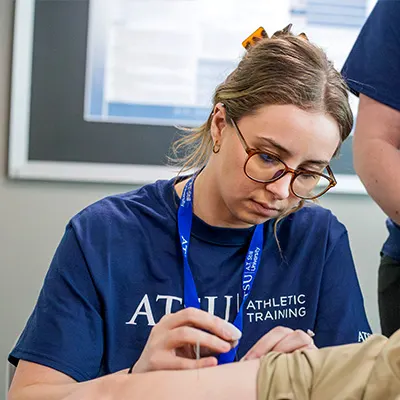
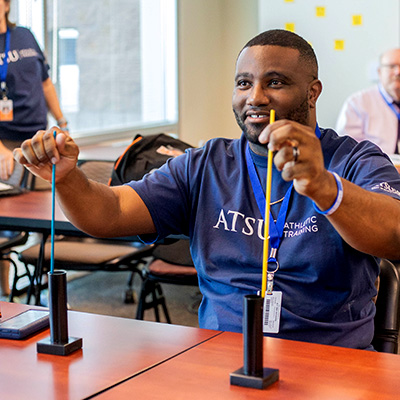
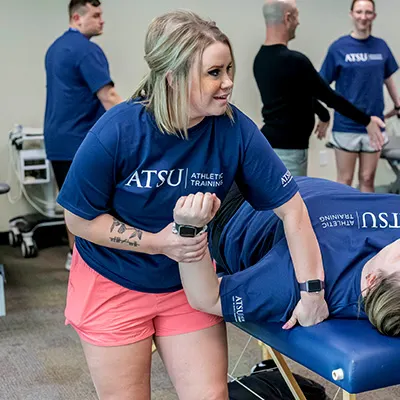
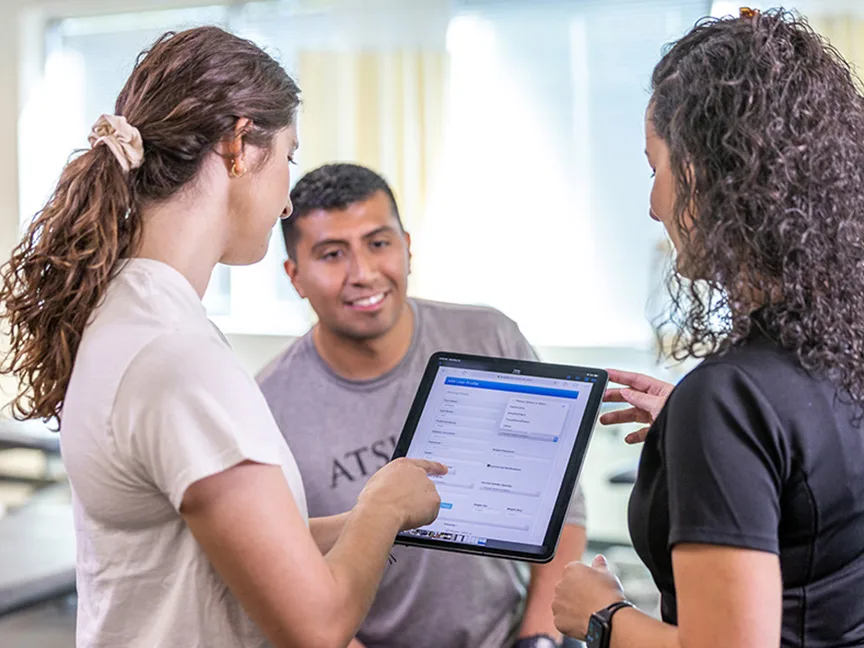
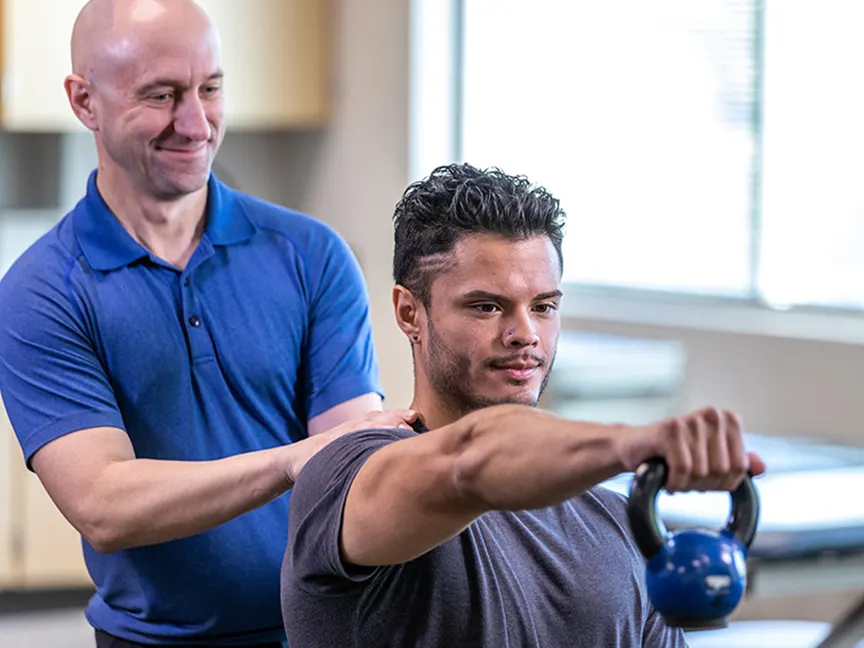
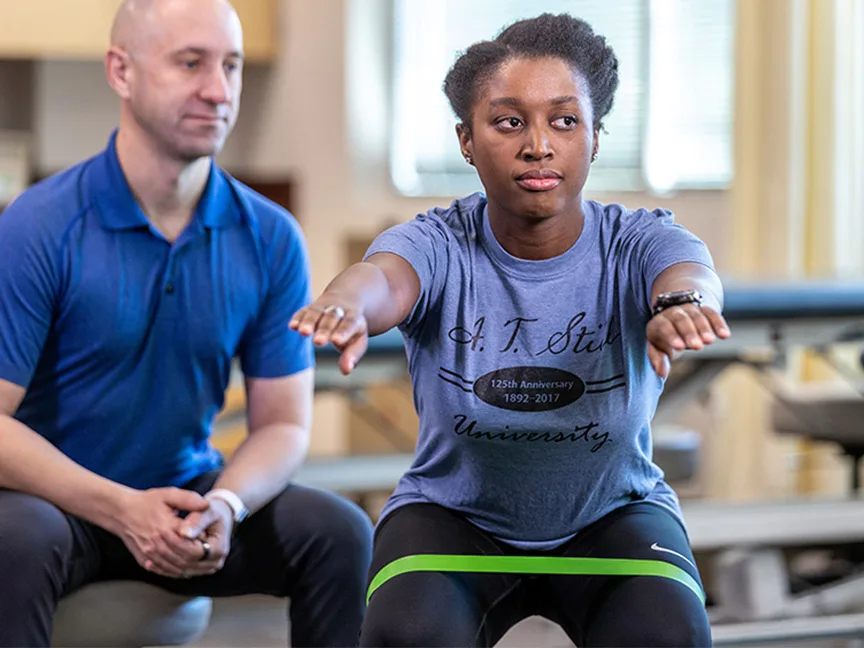
When students join ATSU’s Master of Athletic Training (MAT) program, they become part of a professional community dedicated to whole person healthcare and the advancement of the athletic training profession. From day one, faculty, preceptors, and alumni provide mentorship and guidance that support growth in clinical reasoning, professional judgment, and patient-centered care. This network extends beyond graduation, with MAT alumni serving as preceptors, collaborators, and leaders who continue to advance the profession and support the next generation of clinicians.



Frequently asked questions
For general inquiries, please contact the ATSU Admissions at 877.469.2878.
Athletic trainers are licensed healthcare professionals who specialize in the prevention, examination, diagnosis, treatment, and rehabilitation of injuries and medical conditions. They work with people of all ages and activity levels in a variety of settings, including schools and universities, hospitals, clinics, industry, the military, and the performing arts.
To become a Certified Athletic Trainer, you must first earn a master’s degree in athletic training from a CAATE accredited program. After completing your degree, graduates are eligible to sit for the Board of Certification (BOC) exam, which assesses competency in prevention, evaluation, treatment, and rehabilitation of injuries. Passing this exam grants certification and the ATC credential, and makes you eligible for an athletic training license in the state where you will practice. Enrolling in a master’s in athletic training program ensures you meet the academic and clinical requirements needed to become a Certified Athletic Trainer and prepare for a successful career in diverse healthcare and sports settings.
Applications are submitted through the Athletic Training Centralized Application Service (ATCAS). ATCAS opens each June for the following academic year. Applicants may begin applying in June for a program start the next summer. The program uses rolling admissions, meaning applications are reviewed as they are received until the cohort is full. ATSU’s Master of Athletic Training (MAT) program begins each year in mid-July.
Yes, students may work part time while enrolled in ATSU’s Master of Athletic Training (MAT) program, but the ability to do so depends on the phase of the program. During the foundational phase of this master’s in athletic training program, many students find that part-time or flexible employment is manageable. The hybrid online format of this graduate degree in athletic training provides flexibility, but there are required and optional synchronous sessions with faculty each week, typically held during normal business hours. The clinical phase involves full-time immersive experiences that often include evening and weekend hours, and students are encouraged to limit or avoid outside employment during this time to stay fully engaged in patient care and professional development.
The number of hours you’ll spend on academic work each week for this master’s in athletic training program varies by enrollment status. Full-time students can expect to spend approximately 30–40 hours per week on coursework, assignments, synchronous sessions, and independent study. All students in this entry-level master’s in athletic training program participate in 4–6 hours of required synchronous sessions each week, which take place during normal business hours, along with optional faculty-led sessions and independent study activities.
Students attend up to six Mentoring, Assessment, and Training (MAT) Weekends on ATSU’s Mesa, Arizona campus. These in-person experiences provide opportunities to engage with faculty, practice hands-on skills, and complete assessments of the program competencies.
Accreditation
A.T. Still University of Health Sciences is accredited by the
Higher Learning Commission
230 S. LaSalle Street, Suite 7-500,
Chicago, IL 60604
Phone: 800.621.7440
Fax: 312.263.7462
Email: info@hlcommission.org
Web: hlcommission.org
CAATE accreditation status
The ATSU MAT program is currently seeking accreditation for a new athletic training program and is not accredited by the Commission on Accreditation of Athletic Training Education (CAATE). The institution will be submitting a self-study to begin the accreditation process on June 30, 2028. Submission of the self-study and completion of a site review does not guarantee that the program will become accredited. Students who graduate from the program prior to accreditation WILL NOT be eligible to sit for the credentialing examination for athletic trainers and will not be eligible for licensure in most states.
To learn more about ATSU’s MAT program accreditation and outcomes, visit CAATE Program Information and Outcomes.
The following Policies and Procedures are provided for prospective students:


















.png)