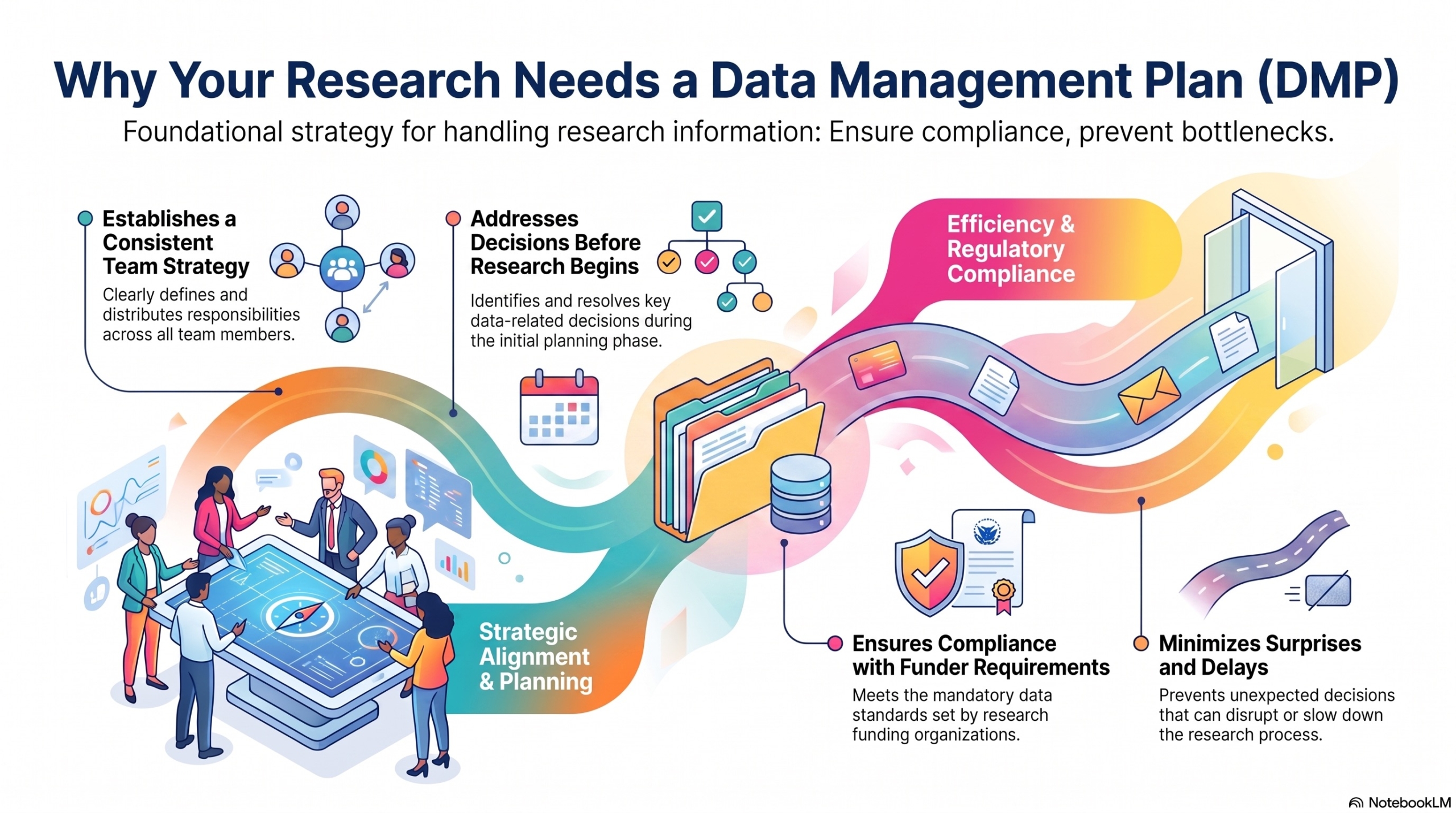
Federal funding agencies are making grant applications easier! Both the NIH (via Notice NOT-OD-26-046) and NSF updated their Data Management and Sharing Plan (DMSP) requirements in 2026. The traditional long-form narrative has been replaced with a simplified, 2-page format built around straightforward Yes/No commitment questions. While active and pending awards will transition to this new format by FY 2027, the core expectation remains the same: sharing data ethically according to FAIR principles.
Whether you’re starting a new grant application or transitioning an active award, the library—in partnership with Special Programs—is here to help with two new self-paced courses:
You can also explore our refreshed Data Services Guide to see how we support your project across every stage of the research data lifecycle.

Do you use the Open Science Framework (OSF) to manage research projects, store files, or collaborate with research teams? The Center for Open Science (COS) is making significant changes to OSF Projects.
November 16, 2026
New OSF Projects and new components of existing projects will no longer be available.
February 19, 2027
Existing OSF Projects will become read-only. You will still be able to view and download content, but you will no longer be able to add or modify files.
If you currently use OSF, take some time to review your projects:
This is a good time to review your research workflows and make a plan for any files or projects that may need to be moved.

For more information, visit OSF Changes: What You Need to Know
Have questions about how these changes may affect your research? Reach out to Leslie Golamb (lesliegolamb@atsu.edu) for assistance.