
Long before the white coats, anatomy labs, simulation experiences, and clinical rotations, many ATSU students were learning other kinds of lessons: how to push through when the body is tired, how to recover when things don’t go as planned, and how to rely on the people beside them.
They were swimmers, dancers, wrestlers, runners, competitive trap shooters, football players, softball players, basketball players, and more. Their fields and performance spaces may have looked very different from a healthcare setting, but the lessons they learned stayed with them.
They learned discipline through early morning practices, resilience through injuries and setbacks, and teamwork through victories and losses. They learned how to perform under pressure, trust the process, and keep moving forward even when progress felt slow. And, even if they didn’t know it at the time, they prepared themselves to succeed at ATSU.
“I think dance prepared me for dental school in more ways than I realized at the time,” says Ira Vats, a third-year dental student at ATSU’s Missouri School of Dentistry & Oral Health (ATSU-MOSDOH). “It taught me discipline, time management, and how to stay calm under pressure, especially when juggling long rehearsals, competitions, and a full course load.”
Vats has been dancing since she was 5 years old. Throughout college, she competed on the University of Southern California’s Bollywood fusion dance team, spending countless hours rehearsing intricate choreography before traveling across the country for competitions. Looking back, she sees striking similarities between those rehearsals and learning new clinical procedures.
“Just like learning choreography, every new skill feels challenging at first,” she says. “But with consistent practice and perseverance, it eventually becomes second nature.”
Her realization isn’t unique. Across ATSU, former athletes from a multitude of backgrounds describe the same phenomenon. While the sports they played may differ, the qualities those experiences instilled continue to shape the way they learn, lead, and care for future patients.

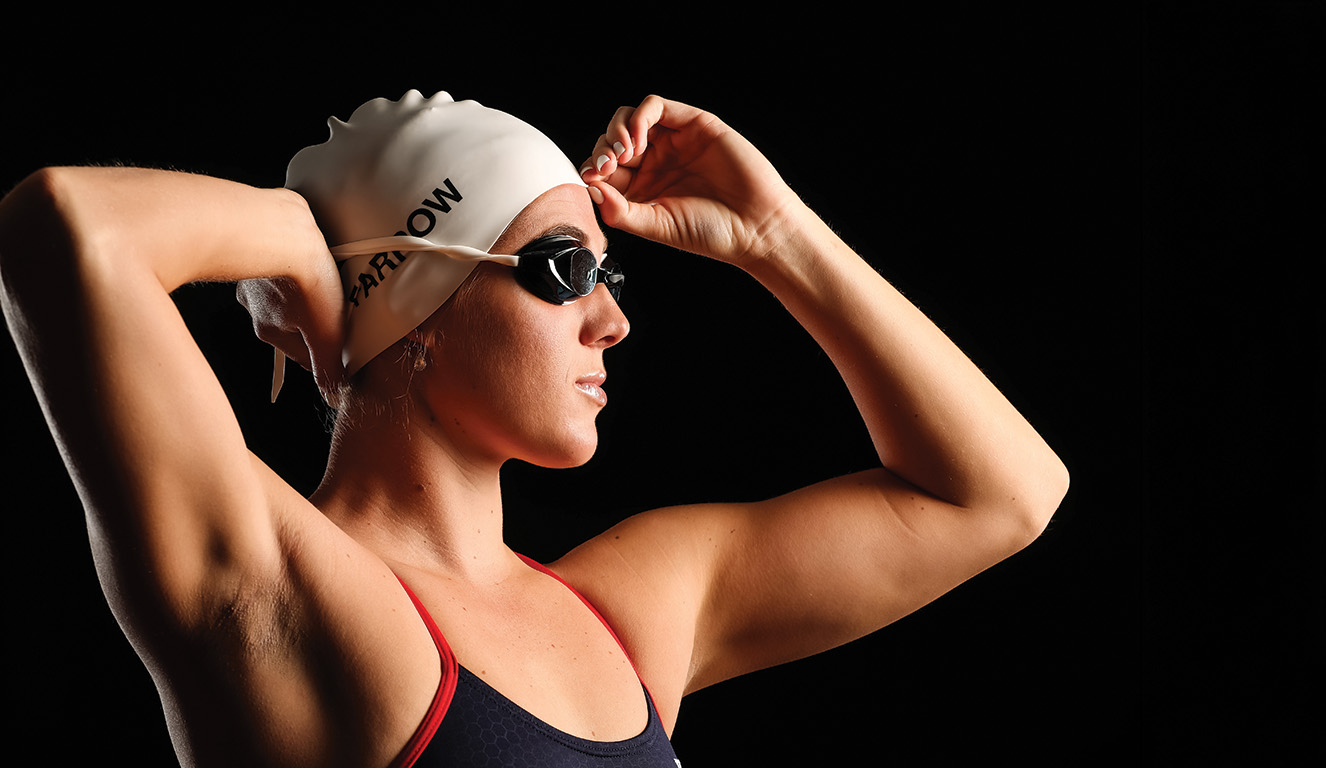
Former collegiate swimmer Hannah Farrow, now a second-year physician assistant (PA) student at ATSU’s Arizona School of Health Sciences (ATSU-ASHS), remembers countless mornings beginning before sunrise. Hours in the pool were followed by classes, strength training, and studying.
“Swimming taught me that progress isn’t made through one great performance, but it’s built through consistency over time,” she says. “This mindset has carried into every aspect of my life, especially PA school where success comes from putting in the work every day, no matter how difficult it may feel at the moment.”
Farrow’s mindset echoes throughout ATSU’s three campuses. Former Division I soccer player Alana Curtis, a second-year PA student at ATSU’s College for Healthy Communities (ATSU-CHC), says soccer taught her meaningful growth doesn’t come from occasional moments of excellence.
“It comes from showing up every day and committing to small habits that add up over time,” she says.
McKenzie Lamos, a second-year ATSU-ASHS PA student and former collegiate softball player, learned a similar lesson. Balancing early morning workouts, classes, practices, and hours of studying taught her the discipline and consistency she now brings to PA school.
“Studying after long days of lectures, preparing for exams, and consistently putting in the work requires the same commitment athletics demanded of me,” she says. “I believe this same discipline will continue to shape my career as a PA. Just as I learned to consistently show up for my teammates, I will continue to show up for my patients, prepared and committed to providing the highest quality of care.”
Jay Ross, a fourth-year dental student at ATSU-MOSDOH and former collegiate football player, sees the same principle whenever he practices clinical procedures.
“In dentistry, drilling cavity preparations doesn’t come easy. It takes thousands of repetitions,” he says. “Effort compounds over time, and those thousands of reps building on each other across a career make you a better clinician.”
In addition to commitment and repetition, soccer has helped Curtis learn the importance of teamwork and clear communication.
“Even the smallest miscommunication on the field could change the outcome of a game,” she says. “In healthcare, effective communication is even more critical, where misunderstandings can have lasting consequences for patient care.”


While discipline laid the foundation, many students say their greatest lessons came from adversity. For Farrow, injuries and chronic health issues forced her to medically retire from collegiate swimming. After dedicating most of her life to the sport, it was incredibly difficult to let go of that identity. However, the experience became one of the defining moments in her journey toward healthcare.
“Going through the rehabilitation process gave me a firsthand appreciation for the impact healthcare providers have on their patients during vulnerable moments,” she says. “It also strengthened my resilience and reminded me that setbacks don’t define us, they often redirect us toward new opportunities, which for me was working toward my career as a PA. That experience continues to shape the empathy I hope to bring to my future patients.”
For Ashlyn Tait, a third-year medical student at ATSU’s Kirksville College of Osteopathic Medicine (ATSU-KCOM), resilience didn’t always mean pushing through alone. Years of competing in cross country and track taught her one lesson she continues to carry into medicine.
“When things get hard, look for someone to help,” she says.
Whether on a cross-country course or in a clinical setting, Tait says success depends on trusting the people around you. Healthcare, much like athletics, requires teammates who can rely on one another, adapt to changing situations, and remain calm under pressure while working toward a common goal.
For recent ATSU-CHC graduate Zack Wally, MS, ’26, wrestling taught him another important part of resilience: accountability. After 14 years in the sport, he learned to look inward when things didn’t go as planned rather than looking for someone else to blame.
“Over time, I learned to value those failures because they became the moments that helped me grow and improve the most,” he says.
That lesson became especially important when Wally broke his leg early in his senior season, costing him scholarship opportunities and putting his athletic career in jeopardy. He worked his way back and still finished the season successfully.
“That experience taught me that setbacks don’t define me,” he says. “As a student, I carry that same mindset by focusing on what I can control and continuing to move forward despite challenges.”
Ross also faced his own turning point after two back surgeries ultimately ended his football career.
“I was able to use this setback and hardship to get through the dental application process, school, and hopefully whatever else gets thrown my way,” he says. “I gained empathy, which I value deeply as a future clinician because it will help me understand my patients and provide better care. I want to give people back their confidence one smile at a time.”
For soccer player and second-year ATSU-CHC student Kayla Montoya, tearing her ACL during her freshman year of college and enduring three knee surgeries offered her a new perspective.
“At the time, I was heartbroken by the news and the long recovery. Looking back, I can reflect on how I felt as a patient,” she says. “This has shaped me as a student and future healthcare provider because I have a better understanding of the emotional toll a diagnosis can have on someone.”
These heartbreaking experiences remind students that healing isn’t only about treating injuries or illnesses; it’s also about understanding what patients have lost and helping them regain the ability to do the things they love.
When chronic back pain threatened to end her lifelong passion for dance, second-year ATSU-KCOM student Mikayla Dennis remembers feeling as though no one asked what dancing meant to her.
“As a future physician, I want to understand what matters most to each patient and develop treatment plans that help them continue the activities that give their lives meaning,” she says. “Whether it’s dancing, walking with friends, or playing with grandchildren, preserving quality of life should be a central part of care. That philosophy is one of the reasons I was drawn to osteopathic medicine and its whole person approach to health.”

In addition to teaching resilience and learning how to power through adversity, many of these former athletes believe working in a team helped them transition to a future role in healthcare.
Vats says dance is far more collaborative than many people realize.
“Every person has to communicate, trust one another, and work together for the performance to be successful,” she says.
Former collegiate basketball player Nickolas Coyle, an ATSU-ASHS student pursuing a doctor of athletic training degree, also believes the values learned playing team sports translate perfectly into healthcare.
“No one wins games alone, and no healthcare professional works in isolation,” he says. “Success depends on individuals bringing their expertise together while remaining focused on a common goal.”
Third-year ATSU-School of Osteopathic Medicine in Arizona (ATSU-SOMA) student Courtney Lohmeier reached a similar conclusion after more than two decades playing competitive soccer. A willingness to contribute – even when the role changes – is one she learned early in her collegiate career when inconsistent playing time forced her to find new ways to support her teammates off the field.
“In medicine it is crucial to know and play whatever role serves the team and patient best,” she says.


Athletics teaches something less tangible but extremely valuable: how to stay composed under pressure.
Jordan Anderson, a second-year medical student at ATSU-KCOM, spent years competing in both swimming and trap shooting. On the trap range, she quickly learned there would always be variables outside of her control, including wind, rain, snow, or bright sunlight.
“You have to adapt to the conditions in front of you, stay focused on the next target, and trust your training,” she says.
Anderson now recognizes these same demands in medicine.
“Every patient and every situation is different, and unexpected challenges are inevitable,” she says.
Former collegiate swimmer and second-year ATSU-SOMA student Korey Schneider agrees.
“Performance under pressure is central to both swimming and healthcare,” he says. “Preparation is what allows you to perform when the stakes are high.”


Eventually, every athlete plays their last game, swims their final race, or performs their final routine. For many, that ending marked a new beginning and an opportunity to discover the qualities built through sport extend far beyond athletics.
“Sports end for everyone eventually,” Ross says. “What matters is having the strength, when that day comes, to redirect all that dedication toward a new dream.”
Schneider describes that lesson as discovering the “inner self” – the quiet voice developed during thousands of hours training alone, learning how to respond to discomfort, setbacks, and success.
“In a field where many decisions are shaped by outside pressures, athletics taught me that fulfillment comes from pursuing excellence in a direction aligned with who you are,” Schneider says.
For these students, their inner athlete – the part shaped by years of competition, preparation, challenge, and growth – remains with them, influencing how they approach their education, careers, and future patients. Although the arena may have changed, the pursuit to keep learning, growing, and striving toward something greater continues.


