QUICK LINKS:
Overview Curriculum Faculty & staff Tuition Admissions Careers & outcomes Student experience FAQs AccreditationAn athletic training doctorate to elevate your impact
A.T. Still University’s (ATSU) online post-professional Doctor of Athletic Training (DAT) program develops clinical and academic leaders who advance the athletic training profession. Doctors of athletic training serve as expert clinicians, educators, and administrators with advanced knowledge and skills for analyzing, developing, and implementing practical solutions to improve the delivery of athletic healthcare and the health outcomes of physically active individuals and their communities.


ONLINE FLEXIBILITY +
1-WEEK ON-SITE INSTITUTE

CUSTOMIZABLE:
5 CONCENTRATION OPTIONS

GRADUATE IN AS
FEW AS 3 YEARS

APPLIED RESEARCH
PROJECT

INDUSTRY-RENOWNED
FACULTY

4 START DATES
PER YEAR
DAT program details
Most athletic trainers who are best fit for an online athletic training doctoral degree are elite clinical, educational, and industry professionals who gain a powerful educational benefit as students are embedded in a work setting while progressing through the curriculum. Educators are prepared with the advanced graduate training needed to effectively teach their own students to succeed as athletic trainers. This doctorate in athletic training program will enable DAT students to apply lessons immediately, while also bringing their unique needs and challenges into the online coursework.
Graduates gain expertise:
- Clinical decision-making
- Innovation in athletic training
- Applied research
- Orthopaedics
- Rehabilitation
- Athletic training education
- Sport neurology and concussion

AT Life Moments
Our students and alumni share how ATSU’s program is empowering their practice.
Upcoming events
Connect with our athletic training faculty at any of these upcoming conferences! Or, join one of our live virtual information sessions to learn more about the DAT program's curriculum, faculty, admissions process, tuition, and more.
Flexible curriculum for aspiring leaders
ATSU’s DAT program offers a robust online curriculum that emphasizes critical thinking at the PhD level while providing real-world, applicable knowledge. Taught by industry experts who stay ahead of emerging trends in athletic training, the program prepares students to become leaders both in clinical practice and academia. Students can immediately apply what they learn, while the online format allows them to bring their own challenges and experiences into the coursework. Discover how this innovative curriculum can help advance your career in athletic training and position you at the forefront of the profession. For more details about the DAT program and the University, check the University Catalog.
Curriculum overview:
Core courses: 42
Concentration courses: 18
Total credit hours: 60
DOWNLOAD CURRICULUM OUTLINE PROGRAM OVERVIEW
Concentration in Clinical Decision-Making
Outcome:
Demonstrate advanced clinical decision-making in athletic training practice in a manner that integrates clinical experience, patient values, and the best available evidence.
Objectives
- Implement quality improvement strategies to identify and address quality gaps for the purpose of improving patient outcomes, system performance, and professional development.
- Demonstrate advanced clinical decision-making in athletic training practice in a manner that integrates clinical experience, patient values, and the best available evidence.
- Demonstrate knowledge of the principles of clinical outcomes assessments and the value of these outcomes to informing patient care and advancing the athletic training profession.
- Utilize information and technology to improve the quality of patient care, manage knowledge, mitigate error, and support clinical decision-making in athletic training practice.

Concentration in Rehabilitation
Outcome:
Demonstrate advanced practice athletic training knowledge and skills in the specialty area of rehabilitation.
Objectives
- Integrate the basic science of connective tissue healing (anatomy, physiology, morphology, histology, and biomechanics) into the management of musculoskeletal injuries.
- Demonstrate advanced practice knowledge and skills in the assessment and diagnosis of movement dysfunction.
- Develop advanced practice knowledge and skills in rehabilitation of movement dysfunction through corrective exercise.
- Demonstrate advanced practice knowledge of transitioning from rehabilitation to sport performance.

Concentration in Orthopaedics
Outcome:
Demonstrate advanced practice athletic training knowledge and skills in the specialty area of orthopaedics.
Objectives
- Demonstrate advanced practice knowledge and skills in the diagnosis of orthopaedic conditions.
- Demonstrate advanced practice knowledge and skills in the management of orthopaedic conditions.
- Demonstrate advanced practice knowledge and skills in the application and interpretation of common imaging and laboratory techniques used in the examination of orthopaedic patients.
- Demonstrate advanced practice knowledge of common orthopaedic surgical procedures with special emphasis on subsequent rehabilitation considerations.
Concentration in Athletic Training Education
Outcome:
Demonstrate contemporary knowledge and understanding of leading practices in curricular design, instructional delivery, and assessment in athletic training education.
Objectives
- Analyze and debate contemporary issues in athletic training education.
- Examine and apply best practices in clinical education and mentoring of athletic training students, young professionals, residents, and fellows.
- Apply instructional delivery and assessment best practices to develop innovative learning opportunities in athletic training.
- Apply innovative curricular design best practices to develop an educational offering related to athletic training.

Concentration in Sports Neurology and Concussion
Outcome:
Demonstrate advanced practice athletic training knowledge and skills in the sub-specialty area of sports neurology and concussion.
Objectives
- Integrate the basic science of neurologic injury and tissue healing into the management of neurologic injuries.
- Demonstrate advanced knowledge in the recognition, assessment, management, and referral of patients with sport-related neurologic conditions.
- Debate current issues related to the recognition, assessment, and management of activity-related traumatic brain injuries.
- Analyze current concepts regarding the assessment, management, and referral of patients with comorbid disorders who suffer activity-related traumatic brain injury.
Obtain a graduate certificate for enhanced knowledge in your selected area of interest. Upon deciding later to obtain a doctorate degree in athletic training at ATSU, these graduate certificates will provide advanced standing.
Graduate Certificate in Clinical Decision-Making
Outcome:
Demonstrate advanced clinical decision-making in athletic training practice in a manner that integrates clinical experience, patient values, and the best available evidence.
Objectives:
- Implement quality improvement strategies to identify and address quality gaps for the purpose of improving patient outcomes, system performance, and professional development.
- Demonstrate advanced clinical decision-making in athletic training practice in a manner that integrates clinical experience, patient values, and the best available evidence.
- Demonstrate knowledge of the principles of clinical outcomes assessments and the value of these outcomes to informing patient care and advancing the athletic training profession.
- Utilize information and technology to improve the quality of patient care, manage knowledge, mitigate error, and support clinical decision-making in athletic training practice.
Graduate Certificate in Rehabilitation
Outcome:
Demonstrate advanced practice athletic training knowledge and skills in the specialty area of rehabilitation.
Objectives:
- Integrate the basic science of connective tissue healing (anatomy, physiology, morphology, histology, and biomechanics) into the management of musculoskeletal injuries.
- Demonstrate advanced practice knowledge and skills in the assessment and diagnosis of movement dysfunction.
- Develop advanced practice knowledge and skills in rehabilitation of movement dysfunction through corrective exercise.
- Demonstrate advanced practice knowledge of transitioning from rehabilitation to sport performance.
Graduate Certificate in Orthopaedics
Outcome:
Demonstrate advanced practice athletic training knowledge and skills in the specialty area of orthopaedics.
Objectives:
- Demonstrate advanced practice knowledge and skills in the diagnosis of orthopaedic conditions.
- Demonstrate advanced practice knowledge and skills in the management of orthopaedic conditions.
- Demonstrate advanced practice knowledge and skills in the application and interpretation of common imaging and laboratory techniques used in the examination of orthopaedic patients.
- Demonstrate advanced practice knowledge of common orthopaedic surgical procedures with special emphasis on subsequent rehabilitation considerations.
Graduate Certificate in Athletic Training Education
Outcome:
Demonstrate contemporary knowledge and understanding of leading practices in curricular design, instructional delivery, and assessment in athletic training education.
Objectives:
- Analyze and debate contemporary issues in athletic training education.
- Examine and apply best practices in clinical education and mentoring of athletic training students, young professionals, residents, and fellows.
- Apply instructional delivery and assessment best practices to develop innovative learning opportunities in athletic training.
- Apply innovative curricular design best practices to develop an educational offering related to athletic training.
Graduate Certificate in Sports Neurology and Concussion
Outcome:
Demonstrate advanced practice athletic training knowledge and skills in the sub-specialty area of sports neurology and concussion.
Objectives:
- Integrate the basic science of neurologic injury and tissue healing into the management of neurologic injuries.
- Demonstrate advanced knowledge in the recognition, assessment, management, and referral of patients with sport-related neurologic conditions.
- Debate current issues related to the recognition, assessment, and management of activity-related traumatic brain injuries.
- Analyze current concepts regarding the assessment, management, and referral of patients with comorbid disorders who suffer activity-related traumatic brain injury.
The goal of the Applied Research Project (ARP) is to advance practical knowledge in athletic training based on applied research and analysis. Students will identify a project of interest that is applicable to their work setting and learn the process of identifying a problem, researching solutions, implementing change, and measuring outcomes. The ARP may not always result in a publishable manuscript, but should provide the student with an understanding of the quality improvement and/or research process.
Students in the DAT have three primary options to complete their ARP requirements: the quality improvement option, case study option, or the original research option. Each option will follow the progression of the four ARP courses and culminate in an ARP presentation and written paper.
To view completed applied research projects, please visit our ARP Showcases


Doctor of Athletic Training courses
The DAT program features a flexible curriculum with core courses in clinical decision-making, leadership, innovation, and applied research, plus a week-long Winter Institute. Students customize their education by choosing 24 elective credits through set concentrations or a self-designed track, building advanced skills for leadership in athletic training.
A.T. Still University course offerings and descriptions are updated on an ongoing basis and are subject to change. For the most current information, please refer to the University Catalog.

ATRN 7210: Foundations of Tissue Healing
Innovation Winter Institute
Applied Research Project
ATRN 7440: Orthopaedic Surgical Considerations
ATRN 8170: Applied Clinical Education and Mentoring
ATRN 7110: Quality Improvement and Patient Safety
ATRN 7250: Rehabilitation Considerations for Sport Performance
ATRN 7340: Assessment and Management of Complex Patients with Concussion
Required foundations
Students build expertise through three core foundations that empower them to make evidence-based decisions, drive innovation, and conduct research on real-world challenges. Along the way, students in ATSU’s athletic training courses can earn digital badges, providing a shareable way to showcase their educational achievements. These foundations help students enhance patient care, lead in healthcare settings, and advance the profession.
The Clinical Decision-Making in Athletic Training foundation provides advanced instruction in evidence-based practice, clinical outcomes assessments, clinical informatics and technology, and quality improvement.
ATRN 7110 - Quality Improvement and Patient Safety
3 Credits
Quality improvement is the consistent, combined effort of many to make changes in healthcare that will improve patient outcomes, system performance, and professional development. This course is designed to enhance the athletic trainer’s understanding of quality improvement, especially as it relates to patient outcomes (health), system performance (care), and professional development (learning). An overview of the history of quality improvement in healthcare will be provided to provide a global understanding of the value of quality improvement to the advancement of patient care. Additionally, the Model of Improvement will serve as the theoretical foundation for the course. Topics will include creating and managing interprofessional teams, identifying quality improvement issues, process literacy, data collection for continuous improvement, and implementing system changes. During the course, students will also be introduced to common tools used in quality improvement projects, such as process diagrams, cause-and-effect diagrams, run charts, and plan-do-study-act cycles. Achievement of course learning objectives will occur through readings, multi-media presentations, discussions, presentations, and individual and/or group assignments.
This course is eligible for advanced standing, and included within the certificate and Master’s program of study.
ATRN 7130 - Patient-Oriented Outcomes
3 Credits
Advanced Patient-Oriented Outcomes is designed to enhance the athletic trainer’s ability to employ clinician-based and patient-based clinical outcome measures for the determination of effective clinical decision-making through the practice of providing patient-centered whole person healthcare. Discussion of disablement models and outcomes research as the foundations to evidence-based practice will be provided. The use of disablement models as a framework for whole person healthcare and the evaluation of health-related quality of life will be presented. This course builds upon the basic components of clinical outcomes assessment by providing advanced content related to clinician- and patient-oriented outcomes. Instruction on the selection, implementation, and use of single- and multi-item, general and specific patient-rated outcomes instruments will be given. Details regarding the concepts of measurement properties, including assessment of measurement change, will be provided. Opportunity to develop an outcomes study through creation of a clinical question in PICO format will be provided and discussion of using practice-based research networks as means to conducting outcomes investigations will occur.
This course is eligible for advanced standing, and included within the certificate and Master’s program of study.
ATRN 7140 - Health Information Technology
3 Credits
The purpose of this course is to provide the athletic trainer with a survey of relevant concepts, tools, and systems of healthcare informatics and technology that may be useful throughout the clinical decision-making process. An understanding of informatics concepts and skills related to the use of technology has been identified as critical for all modern healthcare professionals. Moreover, informatics and technology provide several distinct advantages to the modern healthcare system, including, but not limited to: cost savings; error detection; quality improvement, and improved patient outcomes.
This course is eligible for advanced standing, and included within the certificate program.
ATRN 7150 - Clinical Scholarship in Athletic Training
3 Credits
The course aims to enhance the athletic trainer’s ability to become proficient consumers of available evidence and understand their role as a clinician scientist in support of practice-based research. Contemporary clinical practice requires athletic trainers to not only be consumers of the best available evidence but also contribute to the profession through scholarly activity. The course will cover advanced topics related to the evidence-based practice process, framing clinical questions to enhance clinical decision-making, the clinician-scientist model, clinician-researcher partnerships, and practice-based research networks.
The Applied Research Foundation equips students to design and conduct research or quality improvement projects addressing clinically relevant issues in athletic training, while emphasizing evidence-based methods, dissemination, and the value of practice-based research.
ATRN 8010 - Research Methods and Design
3 Credits
This course will focus on the development and application of graduate level knowledge and skills related to research methods in health sciences. Skills regarding the development of a research proposal, including the identification of a problem, conducting a literature review, developing a hypothesis, designing a study, and submitting an Institutional Review Board application are integral components of this course.
This course is eligible for advanced standing, and included within the Master’s program of study.
ATRN 8020 - Methods of Data Analysis
3 Credits
This course will focus on the development and application of graduate level knowledge and skills related to the use of statistical methodology in health sciences research.
This course is eligible for advanced standing, and included within the Master’s program of study.
ATRN 9001 - Analyzing the Problem
4 Credits
This course is the first in a series of four courses designed to assist you with the development of an applied research project (ARP) through the stages of reviewing the literature to project dissemination. Understanding the past and current literature around your desired research topic area is crucial to the development of a sound research project.
ATRN 9002 - Proposing a Solution
4 Credits
This course is the second in a series of four courses designed to assist you with the development of an ARP through reviewing the literature to project dissemination. The course provides knowledge and skills to develop and present the proposal for your required ARP, crucial for the success of your ARP.
During this course, you will work closely with your ARP advisor to ensure your ARP proposal is methodologically sound and feasible. By the end, you will have completed your ARP proposal and presented it to your ARP advisor and submitted your application to the IRB.
ATRN 9003 - Implementing and Evaluating the Solution
4 Credits
This course is the third in a series of four ARP development courses. It provides knowledge and skills to finalize your data collection forms and sampling methodology, complete data collection, manage data, and implement an analysis plan, preparing your manuscript for dissemination in the next course.
ATRN 9004 - Completing and Disseminating the Project
4 Credits
This final course in the ARP series assists in completing your ARP manuscript and identifying strategies for disseminating research findings through presentations or manuscript submission.
The Leadership and Innovation Foundation develops students' ability to lead and drive innovation in athletic training by fostering skills in research design, quality improvement, and the dissemination of findings to address key clinical challenges in the field.
ATRN 8140 - Leadership and Professionalism in Athletic Training
3 Credits
This course offers an examination and application of theories of professionalism and leadership as they related to various aspects of the practice of athletic training. Topics include, but are not limited to; Contemporary leadership theories, Medical professionalism, Organizational communication, Personal effectiveness and productivity, communities of practice, Leading change, and Conflict management. The course requires students to be active participants in the learning process. We will rely on a series of readings (e.g. book chapters, classic and contemporary articles, research studies), presentations, discussions, and both reflective and authentic applied assignments to provide a deeper understanding of leadership and professionalism and their impact the athletic training profession. By the end of this course you should have the foundational knowledge and a frame work for action that will allow you to make informed decisions about your own leadership roles and pursue meaningful change in both your work setting and your profession.
ATRN 8150 - Winter Institute: Innovation to Advance Athletic Health Care
5 Credits
The four-day intensive Winter Institute is focused on Innovation to Advance Athletic Health Care. The thread of innovation is woven throughout the course with particular emphasis on innovation to advance higher education, innovation to advance patient care, and innovation to advance research. This course is designed to promote in-depth interaction between students and faculty to facilitate the development of action plans for leading innovation in athletic health care education, patient care, and research. Students will prepare a project proposal specific to their work environment to help them develop the knowledge and skills for leading innovations within their own health care facilities and institutions.
The Institute faculty consists of leading innovators in athletic health care from across the country that students will have the opportunity to learn with and from. Each faculty member will lead educational sessions in their respective area(s) of expertise and will serve as small group facilitators. Students will be mixed throughout the week into three distinct small groups that meet daily, each facilitated by an internal (ATSU) and external faculty member, to maximize opportunities for extensive interactions with peers and faculty. Study sections will be used at the beginning of each day to stimulate critical thinking and promote dialogue around the theme of the day. Project groups will meet daily to help students develop their innovative projects for leading and managing environmental change. Reflection groups will meet at the end of each day to discuss the day’s key points, where students experienced their greatest knowledge gains, how the information can be translated into their work setting, and what new questions may have emerged.
An extensive course-reading list will be provided in advance of the face-to-face meeting and students will be required to read all course material prior to the educational sessions. In addition to the project proposal, readings, and attending the face-to-face sessions, students will be expected to complete a post-Institute assessment.
Concentration tracks
Students complete 18 elective credits, selecting from two predefined options or a customizable 12-credit or 24-credit path. Electives may include courses from the predefined options or the applied research foundation.
The concentration in orthopaedics provides advanced instruction in the diagnosis, evaluation and patient care management of patients with orthopaedic conditions.
ATRN 7410 - Orthopaedic Diagnostic Evaluation
3 Credits
This course is designed to provide the athletic trainer with advanced knowledge and clinical skills in the pathology, examination, and diagnosis of orthopaedic and sport-related injuries to the upper and lower extremities, the back, and spine. Emphasis is placed on integrating evidence-based practice principles to enhance clinical decision-making skills in injury evaluation and diagnosis.
ATRN 7430 - Orthopaedic Imaging and Labs
3 Credits
This course is designed to enhance the athletic trainer’s knowledge regarding common imaging and laboratory techniques used in the management of orthopaedic patients. Students will be exposed to various imaging modalities including radiographs, MRI, CT scans, and musculoskeletal ultrasound. The use of laboratory tests for injury and illness will also be examined.
ATRN 7440 - Orthopaedic Surgical Considerations
3 Credits
This course is designed to enhance the athletic trainer’s knowledge and awareness of special considerations for rehabilitation following common orthopaedic surgeries. The course focuses on providing quality education and counseling to orthopaedic patients through post-surgical rehabilitation knowledge and skills.
Surgical techniques for common orthopaedic conditions of the upper and lower extremities will be presented. Topics include tissue response to surgery, post-surgical rehabilitation guidelines, and outcomes. The course concludes with the development of a comprehensive, evidence-based post-surgical rehabilitation protocol.
ATRN 7420 - Orthopaedic Management
3 Credits
This course is designed to enhance the athletic trainers’ ability to effectively manage patients with complex orthopaedic conditions. It focuses on management of orthopaedic conditions with and without co-morbidities, development of care plans, strategies for long-term health quality, and criteria for safe return to participation and sports performance.
The concentration in rehabilitation provides advanced instruction in foundations of tissue healing, assessment and correction of movement dysfunction, and considerations for moving from rehabilitation to sport performance.
ATRN 7210 - Foundations of Tissue Healing
3 Credits
This course is designed to enhance the athletic trainers’ ability to plan and implement a comprehensive sports injury rehabilitation program based on the sequential biological events of connective tissue healing. Orthopaedic basic science concepts involved in clinical assessment, establishment of therapeutic objectives, and selection of therapeutic agents will be addressed. The histology, morphology, and biomechanics of soft connective tissues, muscle, articular cartilage, and peripheral nerves will be presented.
Special focus is placed on the relationships between tissue healing physiology and selection of appropriate therapeutic interventions. Current topics in soft tissue healing and rehabilitation, including viscosupplementation, graft ligamentization, and biologic treatment techniques will be discussed.
ATRN 7230 - Assessment of Movement Dysfunction
3 Credits
This course introduces and explores the foundational concepts of structure and function as they relate to fundamental patterns of human movement. Neuro-developmental progression, motor development, motor learning, and motor control concepts will be presented. Utilizing dynamic systems theory and tensegrity models, factors contributing to movement dysfunction will be identified and techniques for movement assessment will be outlined and discussed.
ATRN 7240 - Corrective Techniques for Movement Dysfunction
3 Credits
This course provides the athletic trainer with advanced knowledge in the rehabilitation of orthopaedic injuries, by utilizing corrective techniques to restore movement patterns and function. Emphasis is placed on integration of tensegrity and dynamic systems models to develop a sequential and progressive rehabilitation program, centered on restoration of movement patterns in fundamental, transitional, and functional postures.
Concepts of mobility, sensorimotor control, movement patterning, and neurodevelopmental progression will be studied. Assisted, active, and reactive techniques for improving mobility, stability, and movement will be taught.
ATRN 7250 - Rehabilitation Considerations for Sport Performance
3 Credits
This course provides the athletic trainer with advanced knowledge on how to bridge the gap from rehabilitation to sport performance. Neuromuscular considerations such as psychomotor and somatosensory control will be explored. Considerations for strength training, time under tension, power development, and athletic movement prescription will be examined. Following this course, the athletic trainer will be able to develop a comprehensive program for the athlete returning to sport post-injury.
The concentration in athletic training education provides advanced instruction in contemporary knowledge and understanding of leading practices in curricular design, instructional delivery, and assessment in athletic training education.
ATRN 8160 - Contemporary Issues in Athletic Training Education
3 Credits
This course explores contemporary issues in athletic training education, with emphasis on the continuum of education from professional programs to post-professional degrees and continuing education. A global perspective on health professions education, accreditation, and current higher education issues will be examined, focusing on athletic training education.
ATRN 8170 - Applied Clinical Education and Mentoring
3 Credits
This course enhances understanding and application of best practices in clinical education and mentoring in athletic training. Topics include bridging the gap between didactic and clinical education, clinical education techniques, preceptor mentoring, and contemporary mentorship models. Students will discuss clinical education and transition-to-practice issues.
ATRN 8180 - Instructional Delivery and Assessment in Athletic Training
3 Credits
This course focuses on instructional delivery and assessment best practices to develop innovative learning opportunities in athletic training. Students will explore emerging teaching theories and educational technologies to enhance student learning and develop instructional methods tailored to diverse learner needs.
ATRN 8190 - Programmatic Planning and Curricular Design in Athletic Training
3 Credits
This course prepares athletic training educators and preceptors to deliver high-quality educational opportunities. Emphasis is on programmatic planning and curricular design principles, instructional design, creating learning outcomes, and evaluating curricular offerings to create and improve athletic training education programs.
The concentration in sport neurology and concussion provides advanced instruction in the diagnosis, assessment, treatment, and management of patients with sport-related concussion and neurological injuries.
ATRN 7310 - Foundations of Sport Neurology
3 Credits
This course is designed to enhance the athletic trainers’ ability to manage neurological injuries resulting from participation in sports and physical activity. Basic science concepts regarding neurological mechanisms of pain, pathophysiology of neurologic injuries, neurodynamics, and the psychological contributions of pain will be discussed. This course will serve as a foundation to the other courses in the Sport Neurology and Concussion track or graduate certificate program.
ATRN 7320 - Diagnosis and Management of Neurologic Conditions in Sport
3 Credits
This course is designed to enhance the students’ knowledge and skills regarding the recognition, assessment, management, and referral of patients who present with neurologic conditions. Specific attention will be placed on understanding red flags for various conditions, diagnostic testing, and appropriate care for various conditions. The course will use a mix of online readings, videos, and discussion forums to foster collaboration among students.
ATRN 7330 - Classification and Management of Traumatic Head Injury
3 Credits
This course is designed to expand the student’s understanding of traumatic head injury. The course will span the spectrum of head injury from catastrophic head injury with internal hemorrhage to mild traumatic brain injury or concussion. Specifics regarding assessment, treatment, and management will be presented. The course will use a mix of online readings, videos, and discussion forums to foster collaboration among students.
ATRN 7340 - Assessment and Management of Complex Patients with Concussion
3 Credits
This course will provide a thorough examination of the treatment of patients with complex medical concerns who suffer a concussion. Specific attention will be focused on the patient’s past medical history and co-morbid factors and how these may influence the assessment, treatment, and management of head injuries. The course will use a mix of online readings, videos, and discussion forums to foster collaboration among students.
View course spotlightGraduate certificates
If you’re looking to learn more about emerging AT trends and apply lessons immediately to your workplace, the graduate certificates offered by A.T. Still University (ATSU) are the perfect place to start. Courses are relevant and applicable for ATs in any setting, and you can focus your knowledge in one of five concentration areas:
The Graduate Certificate in Clinical Decision-Making provides advanced instruction in evidence-based practice, clinical outcomes assessments, clinical informatics and technology, and quality improvement.
ATRN 7110 - Quality Improvement and Patient Safety
3 Credits
Quality improvement is the consistent, combined effort of many to make changes in healthcare that will improve patient outcomes, system performance, and professional development. This course is designed to enhance the athletic trainer’s understanding of quality improvement, especially as it relates to patient outcomes (health), system performance (care), and professional development (learning). An overview of the history of quality improvement in healthcare will be provided to provide a global understanding of the value of quality improvement to the advancement of patient care. Additionally, the Model of Improvement will serve as the theoretical foundation for the course. Topics will include creating and managing interprofessional teams, identifying quality improvement issues, process literacy, data collection for continuous improvement, and implementing system changes. During the course, students will also be introduced to common tools used in quality improvement projects, such as process diagrams, cause-and-effect diagrams, run charts, and plan-do-study-act cycles. Achievement of course learning objectives will occur through readings, multi-media presentations, discussions, presentations, and individual and/or group assignments.
This course is eligible for advanced standing, and included within the certificate and Master’s program of study.
ATRN 7130 - Patient-Oriented Outcomes
3 Credits
Advanced Patient-Oriented Outcomes is designed to enhance the athletic trainer’s ability to employ clinician-based and patient-based clinical outcome measures for the determination of effective clinical decision-making through the practice of providing patient-centered whole person healthcare. Discussion of disablement models and outcomes research as the foundations to evidence-based practice will be provided. The use of disablement models as a framework for whole person healthcare and the evaluation of health-related quality of life will be presented. This course builds upon the basic components of clinical outcomes assessment by providing advanced content related to clinician- and patient-oriented outcomes. Instruction on the selection, implementation, and use of single- and multi-item, general and specific patient-rated outcomes instruments will be given. Details regarding the concepts of measurement properties, including assessment of measurement change, will be provided. Opportunity to develop an outcomes study through creation of a clinical question in PICO format will be provided and discussion of using practice-based research networks as means to conducting outcomes investigations will occur.
This course is eligible for advanced standing, and included within the certificate and Master’s program of study.
ATRN 7140 - Health Information Technology
3 Credits
The purpose of this course is to provide the athletic trainer with a survey of relevant concepts, tools, and systems of healthcare informatics and technology that may be useful throughout the clinical decision-making process. An understanding of informatics concepts and skills related to the use of technology has been identified as critical for all modern healthcare professionals. Moreover, informatics and technology provide several distinct advantages to the modern healthcare system, including, but not limited to: cost savings; error detection; quality improvement, and improved patient outcomes.
This course is eligible for advanced standing, and included within the certificate program.
ATRN 7150 Clinical Scholarship in Athletic Training
3 Credits
The course aims to enhance the athletic trainer’s ability to become proficient consumers of available evidence and understand their role as a clinician scientist in support of practice-based research. Contemporary clinical practice requires athletic trainers to not only be consumers of the best available evidence but also contribute to the profession through scholarly activity. The course will cover advanced topics related to the evidence-based practice process, framing clinical questions to enhance clinical decision-making, the clinician-scientist model, clinician-researcher partnerships, and practice-based research networks.
The Graduate Certificate in Orthopaedics provides advanced instruction in the diagnosis, evaluation and patient care management of patients with orthopaedic conditions.
ATRN 7410 - Orthopaedic Diagnostic Evaluation
3 Credits
This course is designed to provide the athletic trainer with advanced knowledge and clinical skills in the pathology, examination, and diagnosis of orthopaedic and sport-related injuries to the upper and lower extremities, the back, and spine. Emphasis is placed on integrating evidence-based practice principles to enhance clinical decision-making skills in injury evaluation and diagnosis.
ATRN 7430 - Orthopaedic Imaging and Labs
3 Credits
This course is designed to enhance the athletic trainer’s knowledge regarding common imaging and laboratory techniques used in the management of orthopaedic patients. Students will be exposed to various imaging modalities including radiographs, MRI, CT scans, and musculoskeletal ultrasound. The use of laboratory tests for injury and illness will also be examined.
ATRN 7440 - Orthopaedic Surgical Considerations
3 Credits
This course is designed to enhance the athletic trainer’s knowledge and awareness of special considerations for rehabilitation following common orthopaedic surgeries. The course focuses on providing quality education and counseling to orthopaedic patients through post-surgical rehabilitation knowledge and skills.
Surgical techniques for common orthopaedic conditions of the upper and lower extremities will be presented. Topics include tissue response to surgery, post-surgical rehabilitation guidelines, and outcomes. The course concludes with the development of a comprehensive, evidence-based post-surgical rehabilitation protocol.
ATRN 7420 - Orthopaedic Management
3 Credits
This course is designed to enhance the athletic trainers’ ability to effectively manage patients with complex orthopaedic conditions. It focuses on management of orthopaedic conditions with and without co-morbidities, development of care plans, strategies for long-term health quality, and criteria for safe return to participation and sports performance.
The Graduate Certificate in Rehabiliation provides advanced instruction in foundations of tissue healing, assessment and correction of movement dysfunction, and considerations for moving from rehabilitation to sport performance.
ATRN 7210 - Foundations of Tissue Healing
3 Credits
This course is designed to enhance the athletic trainers’ ability to plan and implement a comprehensive sports injury rehabilitation program based on the sequential biological events of connective tissue healing. Orthopaedic basic science concepts involved in clinical assessment, establishment of therapeutic objectives, and selection of therapeutic agents will be addressed. The histology, morphology, and biomechanics of soft connective tissues, muscle, articular cartilage, and peripheral nerves will be presented.
Special focus is placed on the relationships between tissue healing physiology and selection of appropriate therapeutic interventions. Current topics in soft tissue healing and rehabilitation, including viscosupplementation, graft ligamentization, and biologic treatment techniques will be discussed.
ATRN 7230 - Assessment of Movement Dysfunction
3 Credits
This course introduces and explores the foundational concepts of structure and function as they relate to fundamental patterns of human movement. Neuro-developmental progression, motor development, motor learning, and motor control concepts will be presented. Utilizing dynamic systems theory and tensegrity models, factors contributing to movement dysfunction will be identified and techniques for movement assessment will be outlined and discussed.
ATRN 7240 - Corrective Techniques for Movement Dysfunction
3 Credits
This course provides the athletic trainer with advanced knowledge in the rehabilitation of orthopaedic injuries, by utilizing corrective techniques to restore movement patterns and function. Emphasis is placed on integration of tensegrity and dynamic systems models to develop a sequential and progressive rehabilitation program, centered on restoration of movement patterns in fundamental, transitional, and functional postures.
Concepts of mobility, sensorimotor control, movement patterning, and neurodevelopmental progression will be studied. Assisted, active, and reactive techniques for improving mobility, stability, and movement will be taught.
ATRN 7250 - Rehabilitation Considerations for Sport Performance
3 Credits
This course provides the athletic trainer with advanced knowledge on how to bridge the gap from rehabilitation to sport performance. Neuromuscular considerations such as psychomotor and somatosensory control will be explored. Considerations for strength training, time under tension, power development, and athletic movement prescription will be examined. Following this course, the athletic trainer will be able to develop a comprehensive program for the athlete returning to sport post-injury.
The Graduate Certificate in Athletic Training Education provides advanced instruction in contemporary knowledge and understanding of leading practices in curricular design, instructional delivery, and assessment in athletic training education.
ATRN 8160 - Contemporary Issues in Athletic Training Education
3 Credits
This course explores contemporary issues in athletic training education, with emphasis on the continuum of education from professional programs to post-professional degrees and continuing education. A global perspective on health professions education, accreditation, and current higher education issues will be examined, focusing on athletic training education.
ATRN 8170 - Applied Clinical Education and Mentoring
3 Credits
This course enhances understanding and application of best practices in clinical education and mentoring in athletic training. Topics include bridging the gap between didactic and clinical education, clinical education techniques, preceptor mentoring, and contemporary mentorship models. Students will discuss clinical education and transition-to-practice issues.
ATRN 8180 - Instructional Delivery and Assessment in Athletic Training
3 Credits
This course focuses on instructional delivery and assessment best practices to develop innovative learning opportunities in athletic training. Students will explore emerging teaching theories and educational technologies to enhance student learning and develop instructional methods tailored to diverse learner needs.
ATRN 8190 - Programmatic Planning and Curricular Design in Athletic Training
3 Credits
This course prepares athletic training educators and preceptors to deliver high-quality educational opportunities. Emphasis is on programmatic planning and curricular design principles, instructional design, creating learning outcomes, and evaluating curricular offerings to create and improve athletic training education programs.
The Graduate Certificate in Sports Neurology and Concussion provides advanced instruction in the diagnosis, assessment, treatment, and management of patients with sport-related concussion and neurological injuries.
ATRN 7310 - Foundations of Sport Neurology
3 Credits
This course is designed to enhance the athletic trainers’ ability to manage neurological injuries resulting from participation in sports and physical activity. Basic science concepts regarding neurological mechanisms of pain, pathophysiology of neurologic injuries, neurodynamics, and the psychological contributions of pain will be discussed. This course will serve as a foundation to the other courses in the Sports Neurology and Concussion track or graduate certificate program.
ATRN 7320 - Diagnosis and Management of Neurologic Conditions in Sport
3 Credits
This course is designed to enhance the students’ knowledge and skills regarding the recognition, assessment, management, and referral of patients who present with neurologic conditions. Specific attention will be placed on understanding red flags for various conditions, diagnostic testing, and appropriate care for various conditions. The course will use a mix of online readings, videos, and discussion forums to foster collaboration among students.
ATRN 7330 - Classification and Management of Traumatic Head Injury
3 Credits
This course is designed to expand the student’s understanding of traumatic head injury. The course will span the spectrum of head injury from catastrophic head injury with internal hemorrhage to mild traumatic brain injury or concussion. Specifics regarding assessment, treatment, and management will be presented. The course will use a mix of online readings, videos, and discussion forums to foster collaboration among students.
ATRN 7340 - Assessment and Management of Complex Patients with Concussion
3 Credits
This course will provide a thorough examination of the treatment of patients with complex medical concerns who suffer a concussion. Specific attention will be focused on the patient’s past medical history and co-morbid factors and how these may influence the assessment, treatment, and management of head injuries. The course will use a mix of online readings, videos, and discussion forums to foster collaboration among students.
View course spotlight
See what our DAT students and professors had to say at our Winter Institute event:
Industry-leading athletic training faculty
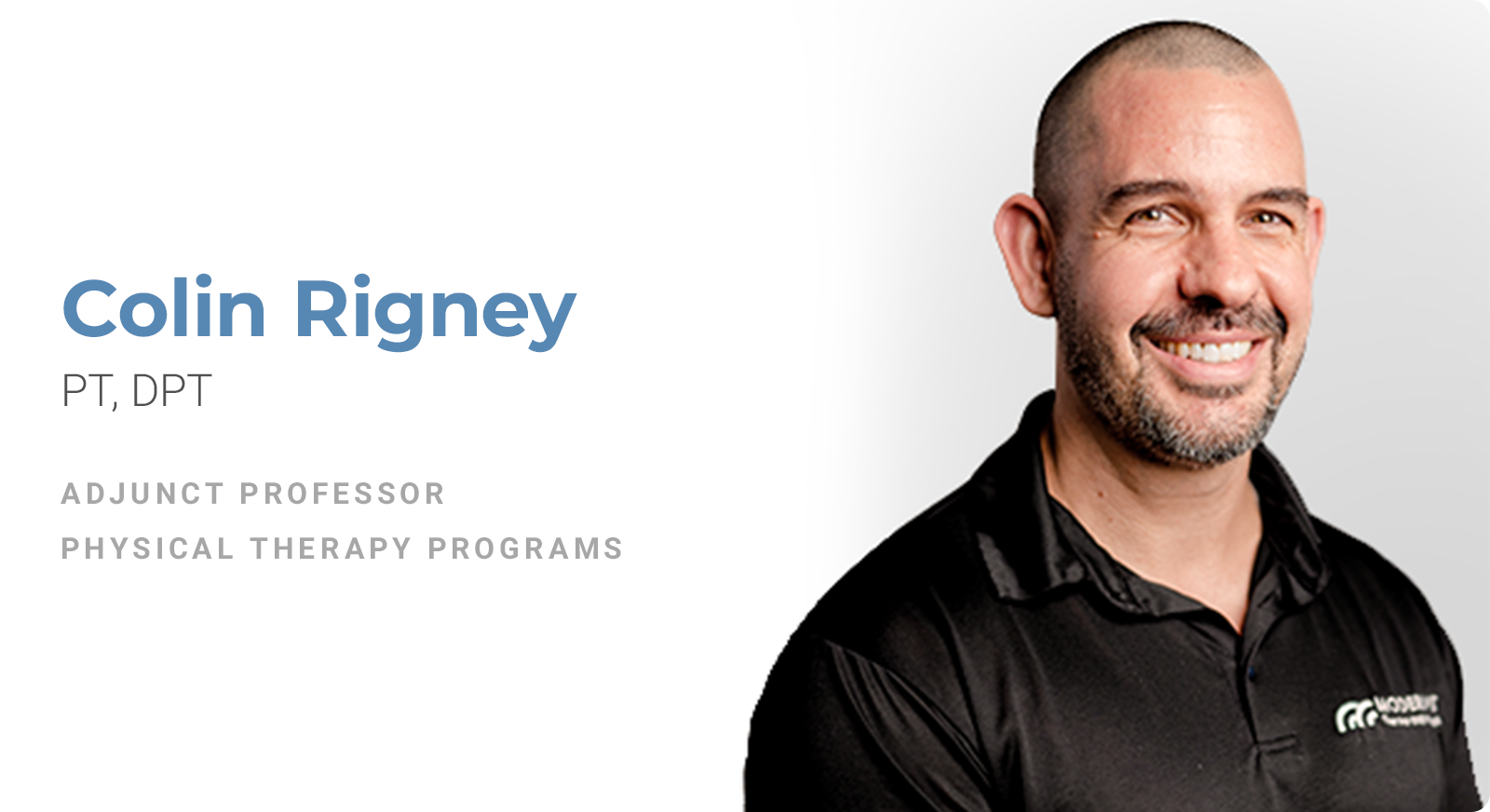
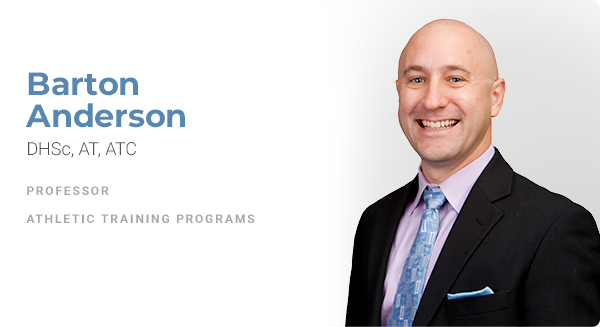
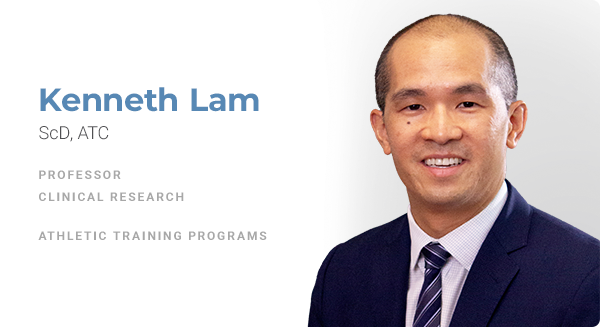
Sports medicine leadership and expertise is demonstrated throughout the program, including by ATSU’s faculty and staff. Renowned faculty are recognized experts with national influence who share emerging trends and opportunities in athletic training practice and education. Interaction with a variety of instructors offers students exposure to a variety of teaching styles, healthcare- and education-related backgrounds and experiences that contribute to a well-rounded education fostering personal and professional growth.

Featured Faculty:

Featured Faculty:

Featured Faculty:

Featured Faculty:

Featured Faculty:

Featured Faculty:
Hear from our leadership and faculty
Tuition
Tuition and fees for the Doctor of Athletic Training program are designed to cover the cost of high-quality education and essential student services. In addition to tuition, students are responsible for a student technology fee, which helps support access to critical student resources. Please note that tuition rates and fees are subject to change, please review the tuition and fees breakdown for the most up-to-date information.
To get an idea of your tuition and plan your future with confidence, check out our tuition estimator.

Investing in your future as a student is one of the most important steps you will take. ATSU can help you create a financially sound aid package that will let you focus on your education instead of worrying about how you will finance it. To learn more about your options visit Enrollment Services or contact them at enrollmentservices@atsu.edu or call 660.626.2019.
Scholarships are available to ATSU students. ATSU offers a number of internal scholarships. Each year, scholarship applications will open in mid-January and close in mid-March for ATSU students. Doctor of Athletic Training students are encouraged to apply for the Dwight Patterson Youth Sports Scholarship. Established to honor the legacy of area businessman Dwight Patterson, the Dwight Patterson Youth Sports Scholarship provides financial assistance to Doctor of Athletic Training students who have demonstrated a commitment to youth sports and the well-being of youth athletes through their academic, clinical, and service activities.
Current and admitted ATSU students have access to Scholarship Universe within their my.ATSU.edu student portal. ScholarshipUniverse is a personalized scholarship search engine with vetted external scholarship opportunities year-round. Check Scholarship Universe throughout the year to research and apply for external scholarships through this trusted source.
External scholarships are also available to DAT students. The NATA Foundation offers post-professional scholarships of $2300. The applications open in November, and the application deadline is mid-January, each year.
Several NATA districts offer scholarships.
| Category | Scholarship Name | Deadline | Link |
|---|---|---|---|
| District 1 (CT, ME, MA, NH, RI, VT) | EATA Frank George Doctoral Scholarship | Annual Application Deadline 10/15 | https://www.goeata.org/application |
| District 2 (DE, NJ, NY, PA) | EATA Frank George Doctoral Scholarship | Annual Application Deadline 10/15 | https://www.goeata.org/application |
| District 3 (DC, MD, NC, SC, VA, WV) | MAATA William Prentice Scholarship | Annual Application Deadline 3/15 | https://www.maata.org/maata-scholarships |
| District 5 (IA, KS, MO, NE, ND, OK, SD) | MAATA Post- professional Athletic Training Scholarship | Annual Application Deadline 10/20 | https://www.maatad5.org/scholarship-post-professional-application/ |
| District 6 (TX, AR) | SWATA Graduate Scholarship | Annual Application Deadline 4/15 | https://www.swata.org/wp-content/uploads/2024/02/Graduate-Scholarship-Instructions-24.pdf |
| District 7 (AZ, CO, NM, UT, WY) | RMATA Post- Professional Scholarship | Annual Application Deadline 12/31 | https://www.rmata.org/scholarships-grants |
| District 7 (AZ, CO, NM, UT, WY) | RMATA Doctoral Scholarship | Annual Application Deadline 12/31 | https://www.rmata.org/scholarships-grants |
| District 9 (AL, FL, GA, PR, VI, KY, LA, MS, TN) | SEATA Memorial Post-Professional Scholarship | Annual Application Deadline 9/15 | https://www.seata.org/grants-scholarships |
| District 9 (AL, FL, GA, PR, VI, KY, LA, MS, TN) | Arnold T. Bell Memorial EDAC Graduate Scholarship | Annual Application Deadline 9/15 | https://www.seata.org/grants-scholarships |
| District 10 (AK, ID, MT, OR, WA) | Bob Peterson Post-Professional Scholarship | Annual Application Deadline 2/1 | https://www.nwata.org/scholarships |
Admissions
The DAT program will admit athletic training professionals with diverse professional and personal experiences who have demonstrated capacity to pursue a rigorous course of graduate study. Prospective students will be selected by considering the overall qualities of the applicant through application content, academic record, and prior experience.
Candidates accepted for admission must demonstrate and/or submit documentation of the following prior to matriculation:
Candidates accepted for admission to the DAT program will have earned a masters or higher degree from a regionally accredited institution. Applicants must submit official transcripts from college/university where the highest degree was earned.
Applicants to the Athletic Training program must demonstrate Board of Certification (BOC) certification as an athletic trainer or substantial equivalence, such as credentialing from the Canadian Athletic Therapist Association, Athletic Rehabilitation Therapists of Ireland, Society of Sports Therapists, British Association of Sport Rehabilitators and Trainers. Verification of progress toward completion of all eligibility requirements to sit for the BOC certification examination will be accepted at the time of application, but BOC certification must be verified prior to matriculation.
Students must demonstrate proof of state licensure (if required in your current state of residence). A photocopy of a current state license is acceptable.
Candidates must have achieved a minimum overall graduate cumulative GPA of 2.75 (on a 4.0 scale).
One official recommendation form must be completed by an academic advisor, professor, employer, or other individual who can attest to the applicants potential for success in the doctoral program. Letters from an educational consulting service will not qualify. Recommendations must be submitted for each application year.
Candidates are expected to be computer literate and experienced in word processing. All curricula require extensive computer usage. Accepted applicants are required to have a personal computer prior to matriculation and have access to a high-speed Internet connection.
Candidates must submit an application form.
GRE scores are not required for admission to the DAT.
Applicants are required to demonstrate proficiency in English when applying to the Arizona School of Health Sciences, A.T. Still University. Written and spoken proficiency in the English language may be demonstrated by one of the following options:
- Option 1 - English is your first language.
- Option 2 - Graduated from a regionally accredited four year university or college in the United States (minimum BA or BS).
- Option 3 - You are demonstrating your English proficiency by submitting acceptable scores on the Test of English as a Foreign Language (TOEFL) or the International English Testing Service (IELTS).
Acceptable minimal scores for ASHS applications are:
- Internet based total score = 80
- Acceptable IELTS score are an overall band score of 6.5
The TOEFL is administered by TOEFL/TSE Services, P.O. Box 6151, Princeton, NJ, 08541-6151, USA 609. 771.7100. Information is available at www.toefl.org. A.T. Still University’s institutional code is 0339. Please be sure to include this information when you submit your application packet. TOEFL Educational Testing Services P.O. Box 6151 Princeton, NJ 08541-6151 609.771.7100
Candidates must complete a phone interview with the program director.
Students must demonstrate proof of state licensure (if required in your current state of residence). A photocopy of a current state license is acceptable.
All ATSU students are required to own a computer system. Minimum system requirements vary depending on program.
Careers and outcomes
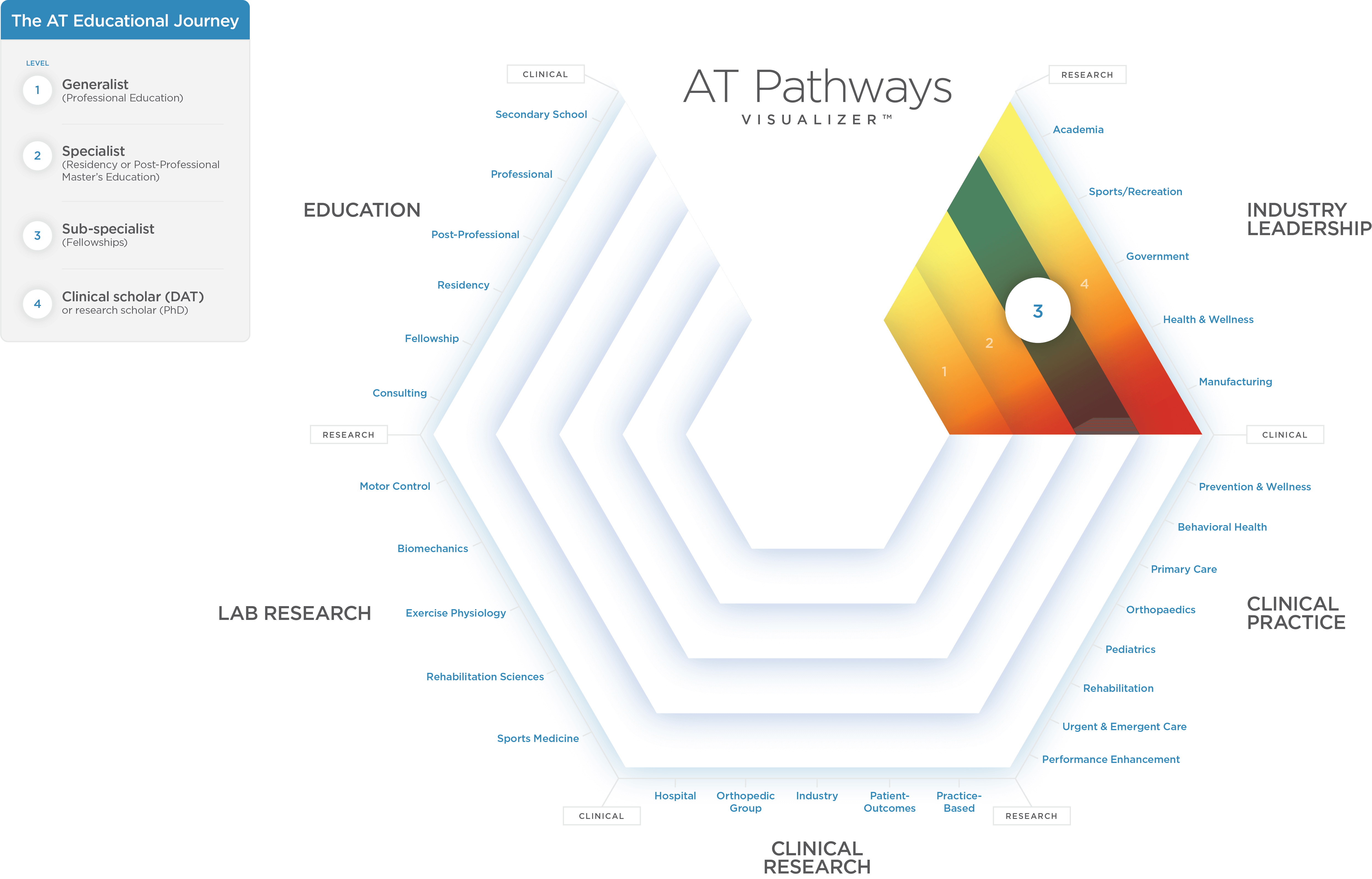
With so many educational options and different opportunities within athletic training curricula, the first step is matching your desired professional outcomes to the right educational tracks.
DAT students and alumni
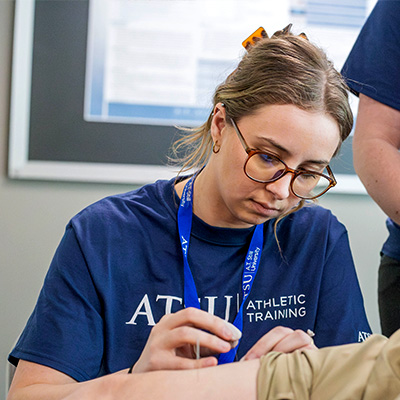
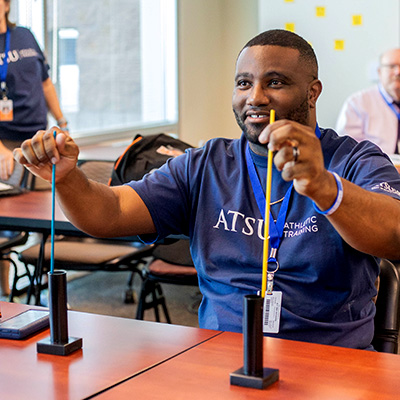
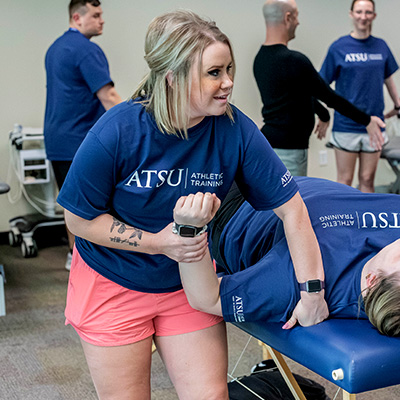
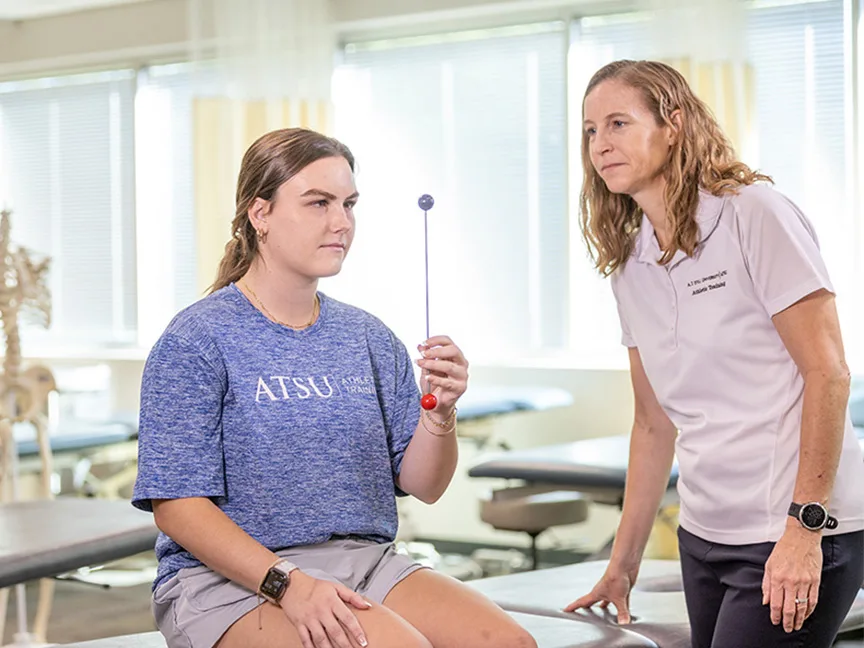
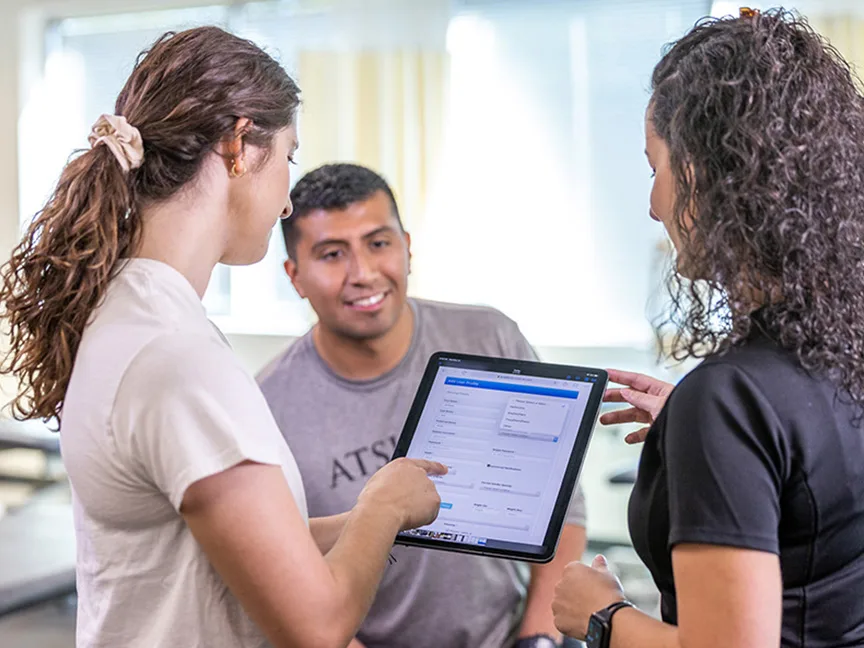
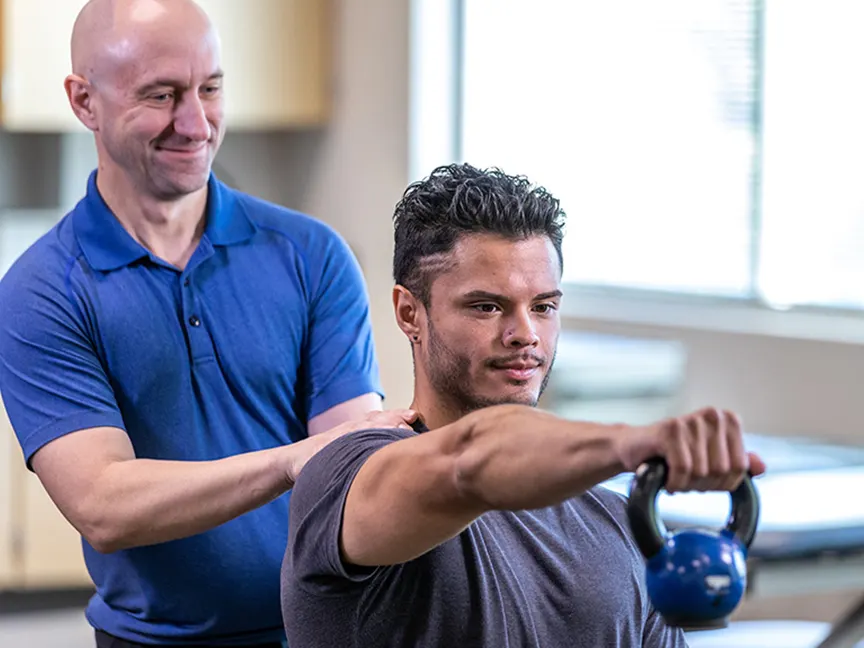
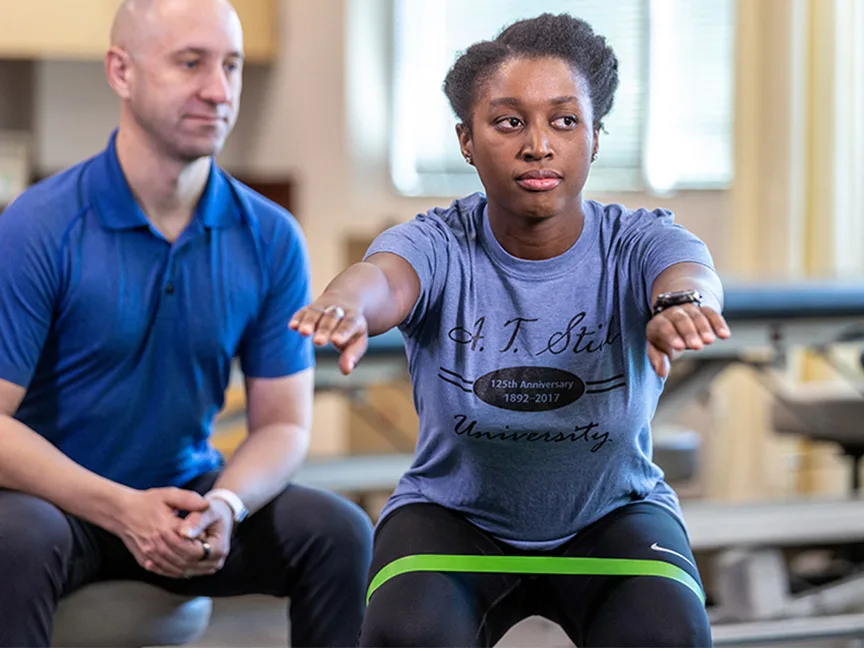
When you gain entry to the Doctor of Athletic Training program, you are joining a collective dedicated to whole person healthcare and the advancement of the athletic training profession. Connect with our students, alumni, and faculty to hear how their experiences with ATSU propelled their careers. Check out our global student breakdown to learn more about our community.



Voices of the ATSU DAT program
Students and alumni share the moments that shaped their experience at ATSU. Explore how the program supports professional growth, leadership development, and meaningful career outcomes.
Frequently asked questions
For general inquiries, please contact the Department of Athletic Training at 877.469.2878 or email onlineinquiry@atsu.edu.
The DAT is online except for a one-time requirement to complete the Winter Institute, a four-day intensive program focused on Innovation to Advance Athletic Health Care. Led by ATSU faculty who are leading innovators in athletic healthcare, the course emphasizes innovation in higher education, patient care, and research while promoting peer collaboration through group discussions and project-based learning. Students will develop action plans for leading innovation in their work environments.
Earning a DAT signifies a commitment to lifelong learning as an AT. Doctoral-educated ATs demonstrate a foundation for advanced expertise, leadership skills, scholarly contributions, teaching/academia proficiency, and enhanced professional networking and visibility—all of which position them as ideal leaders and changemakers in any AT setting.
The DAT program is designed for practicing ATs with life and work demands, and most of our students continue full-time work while enrolled. Students can finish the DAT degree on their timeline with an almost entirely online curriculum that meets them where they’re at. For those not ready to commit to a full doctorate, the digital badges, graduate certificates, and the post-professional MSAT program offer building blocks toward completion of the DAT.
Each course in the DAT is structured as 10, one-week modules in Canvas. Coursework for each module is completed asynchronously during the assigned week, meaning you will have the flexibility to complete coursework at your own pace throughout the week and fit it seamlessly into your busy schedule as a practicing AT. All courses are crafted to empower you with actionable knowledge that you can go into work with and immediately begin making an impact.
The Applied Research Project (ARP) is a required component of the DAT program. The completion of this project is supported with a foundational curriculum of four courses that guide students from the stages of reviewing the literature to project dissemination.
Admission to ATSU’s DAT program requires applicants to hold a master’s or higher degree from a regionally accredited institution, along with official transcripts, and demonstrate certification from the Board of Certification (BOC) as an athletic trainer or equivalent credentialing. Additionally, applicants must provide proof of state licensure (if applicable), and have a minimum overall graduate cumulative GPA of 2.75 (on a 4.0 scale). Part of the application submission requires an app fee of $70.
A recommendation form should be submitted from an academic advisor, professor, or employer. GRE scores are not required. Proficiency in English is necessary, and can be demonstrated through various means such as being a native English speaker, graduating from a U.S. university, or achieving acceptable scores on the TOEFL or IELTS exam. Applicants must also undergo a phone interview with the program director. Admitted DAT students are expected to be computer literate and in possession of a personal computer and high-speed internet connection.
Additional programs and resources
Athletic Training Department
ATSU’s Athletic Training Department offers students both a master’s and doctoral-level program, as well as five certificate programs. The Athletic Training Department uses the most advanced, evidence-based strategies available to provide students with the knowledge that enhances care, optimizes outcomes, and improves overall health of their patients.
Athletic Training Practice-Based Research Network
Headquartered at A.T. Still University in Mesa, AZ, the Athletic Training Practice-Based Research Network (AT-PBRN) is an affiliate network of the Agency for Health Care Research and Quality (AHRQ) and is the first and only practice-based research network in athletic training. The mission of the AT-PBRN is to improve the quality of care and patient outcomes for patients under the care of athletic trainers. Personnel consist of 8 athletic training researchers, a bio-statistician, a post-doctoral research fellow, and a research coordinator. In addition, the AT-PBRN houses an external advisory board, which consists of a panel of fellow athletic trainers from across the country.
ATSU Concussion Program
A.T. Still University's Concussion Program serves as a resource for sport-related concussion education, research, and service for young athletes, parents, coaches, and administrators. Outreach services provided to athletes in Arizona include education, baseline (pre-season) testing and post-injury concussion evaluation. The program also provides training and education about concussions to athletes, coaches, parents, athletic trainers, athletic training students and other healthcare providers. Additionally, ATSU's Concussion Program is engaged in numerous research projects focusing on concussion awareness, assessment tools and interventions to enhance recovery.
CORE-AT Electronic Medical Record (EMR)
Students in A.T. Still University’s athletic training programs utilize the industry-leading CORE-AT electronic medical record (EMR) system, a web-based injury surveillance and EMR system for use by athletic trainers. The CORE-AT EMR was designed and developed by athletic trainers in partnership with ESSENTIALTALK, an international technology communication company, and is compliant with the data acquisition, storage, and transmission standards set forth by the Health Insurance Portability and Accountability Act (HIPAA). Health information obtained using the CORE-AT system is not stored locally on computers. Instead, data is uploaded in real time and transmitted to secure, redundant servers
Athletic Training Continuing Education
A.T. Still University is recognized by the Board of Certification, Inc. to offer continuing education for certified athletic trainers. The Athletic Training Practiced Based Research Network (AT-PBRN) is an ongoing source for clinical outcomes and evidence-base practice (EBP) education to educate and train post professional athletic training students. Free evidence-base practice category CEUs include: Incorporating EBP into Athletic Training: Overview of Practice-Based Partnerships (.75 - EBP CEU) Health Information Technology in Athletic Training (1.25 EBP CEUs) Coming Soon... Evidence-Based Practice in Athletic Training (3 EBP CEUs)

Accreditation
A.T. Still University of Health Sciences is accredited by the
Higher Learning Commission
230 S. LaSalle Street, Suite 7-500,
Chicago, IL 60604
Phone: 800.621.7440
Fax: 312.263.7462
Email: info@hlcommission.org
Web: hlcommission.org