QUICK LINKS:
ATSU-ASHS home About ATSU-ASHS Athletic training Audiology Occupational therapy Physical therapy Physician assistant Speech-language pathology Academic calendar University catalog Arizona campus News and events PoliciesTransforming PT practice
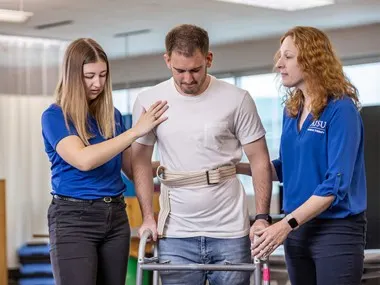
ATSU-ASHS’ Physical Therapy Department prepares future and practicing physical therapists through innovative education, clinical training, and professional development grounded in evidence-based practice and whole person healthcare. From entry-level doctoral education to postprofessional programs, residency training, and continuing education, the department supports learners at every stage of their PT careers. Through expert faculty, hands-on learning, research, and community engagement, PT students develop the knowledge, skills, and compassion needed to advance the physical therapy profession and improve patient care.
Find the physical therapy degree that’s right for you
This continuum of physical therapy education includes entry-level preparation, advanced doctoral study, and post-professional development designed to support learners throughout their PT careers.
Doctor of Physical Therapy (DPT)
Prepares aspiring physical therapists to enter the profession and improve patient function and quality of life.
Doctor of Physical Therapy (tDPT)
Supports practicing physical therapists worldwide in advancing clinical expertise and knowledge.
Doctor of Physical Therapy non-degree courses
Provides continuing education for physical therapists seeking advanced clinical knowledge.
Orthopedic Physical Therapy Residency
Develops advanced orthopedic clinical skills through structured, mentored practice.
Physical Therapy Neurologic Residency
Builds specialized expertise in treating neurologic conditions through advanced clinical training.
Physical Therapy CEU courses
Supports lifelong learning through accredited continuing education and interdisciplinary training.
Physical therapy research and scholarly work
ATSU’s physical therapy faculty are recognized for their expertise, accessibility, and commitment to creating a supportive learning environment. Through active research agendas, scholarly work, and community engagement, faculty advance best practices in physical therapy while mentoring students as developing clinician scientists.
PT students are encouraged to participate directly in research projects, with many serving as co-authors on faculty publications and national presentations. Supported by a well-equipped research laboratory, these collaborative experiences help prepare PT graduates to advance both the profession and the human condition.
- A Survey of Student Involvement in the American Physical Therapy Association
- Adding Gabapentin to a multimodal regimen does not reduce acute pain, opioid consumption or chronic pain after total hip arthroplasty
- Addressing plagiarism in online programmes at a health sciences university: a case study
- Athletic trainers’ perceptions of and experience with social determinants of health
- Configuration Variability of the Six-minute Walk Test among licensed Physical Therapists working with neurological conditions: A pilot Survey.
- Effect of a Matter of Balance Programme on avoidance behaviour due to fear of falling in older adults
- Effects of Manual Lymphatic Drainage Techniques on Conditions Affecting the Musculoskeletal System: A Systematic Review
- Effects of Patient-Provider Interactions on Diagnosis and Care for Women With Chronic Pelvic Pain: A Qualitative Study
- Empathy During Patient-Provider Interactions for Women With Chronic Pelvic Pain: A Qualitative Study
- Examining pain before and after total joint replacement (TKR): A retrospective chart review
- Facilitators and Barriers to the Use of Outcome Measures with Patients with Breast Cancer-Related Lymphedema
- Faculty Survey on the Status of Lymphology Education in Entry-Level Doctorate Physical Therapist Programs
- Gait asymmetry pattern following stroke determines acute response to locomotor task.
- How people with lumbar spinal stenosis make decisions about treatment: A qualitative study using the Health Belief Model
- Impact of a 7-Day Retreat for People with Parkinson’s Disease: A Phenomenological Study
- Impaired limb shortening following stroke: What’s in a name?
- Manual Lymphatic Techniques for the Orthopedic Manual Therapist
- Pelvic excursion during walking post-stroke: A novel classification system
- Peyton’s Four-Step Approach for Teaching Lumbar Spine Thrust Joint Manipulation to Student Physical Therapists
- Physical Therapists’ Assessment of Patient Self-Efficacy for Home Exercise Programs
- Pre- and Post-microsurgical rehabilitation interventions and outcomes on breast cancer-related lymphedema: a systematic review
- Pregabalin reduces postoperative opioid consumption and pain for 1 week after hospital discharge, but does not affect function at 6 weeks or 3 months after total hip arthroplasty
- Slower than normal walking speeds involve a pattern shift in joint and temporal coordination contributions.
- Social determinants of health: considerations for athletic health care
- Student and faculty perceptions of plagiarism in health sciences education
- The lived experience of primary lymphoedema: a phenomenological study of personage and caregiver
- The Self-Efficacy for Home Exercise Programs Scale: Development and Psychometric Properties
- Use of Outcome Measures by Certified Lymphedema Therapists With Survivors of Breast Cancer-Related Lymphedema
- Virtual Grand Rounds: A Curricular Model of Translating Evidence-Based Practice From the Classroom to the Clinic
- Configurations of the Six-Minute Walk Test in People with Parkinson’s Disease: Do the number of Turns matter?
- Changing Minds, Changing Lives (CMCL)-Healthcare professionals as key influencers
- Clinical Variability of Six-Minute Walk Test Protocols by Licensed Physical Therapists: A Survey
- Comparison of Flexible Tape-Measure and Operator-Independent, High-Resolution Ultrasound in Assessment of Diasthesis Recti Abdominis
- Configurations of the Six-Minute Walk Test for People with Parkinson Disease: Do the number of turns matter?
- Confronting Plagiarism: A Process and Remediation Program that Works
- Defining Adaptive Sports Experiences: A National Survey of PT and PTA Programs
- Faculty Survey on the status of Lymphology Education in Entry-Level Doctorate Physical Therapist Programs
- I Am An Athlete: The Lived Experience of Athletes with a Physical Disability Participating on School-Based Sports Teams
- Influence of a Case-Based Activity on the Attitudes of Students Toward Interprofessional Collaborative Practice
- Junior Faculty Mentorship in Physical Therapy Education
- Locomotor Training using the AlterG in Individuals with Incomplete Spinal Cord Injuries
- Measuring interrecti distance to screen for diastasis recti abdominis
- Para Athletes: Spatial and Temporal Sprint Performance Measures in Athletes Competing in Classes T53 and T54
- Para Athletes: Spatial and Temporal Sprint Performance Measures in Athletes with Hypertonia, Ataxia, and Athetosis
- Participation in Adaptive Sports Programs: Perceptions of the Parent and Child
- Patient-Provider Interactions and Influence on Healthcare for Women with Chronic Pelvic Pain
- Patterns of Physical Therapy Screening for Urinary Incontinence in Arizona
- Physical Therapist’s Utilization of Clinical Tests for Assessment of Sacroiliac Joint Dysfunction: A 12-year Time Series Exploring Clinical Reasoning
- Qualities of ATSU Graduates Identified as Contributing Factors to Leadership in the Physical Therapy Profession
- The effects a Bal-A-Vis-X intervention on motor skills, particularly coordination and balance, in typically developing school-aged children.
- The Experience of Evidence-Based Practice: The Clinician’s Perspective
- The International Centre for Disability and Rehabilitation
- The Relationship Between Motor Capacity and Performance in Children with Cerebral Palsy: A Systematic Review
We are proud to showcase our student Capstone Research Projects. These projects represent the culmination of a two-year research experience and are formatted as ePosters presented to a live audience each spring archived for broader access to relevant project information.
VIEW CRP SHOWCASESConnected by purpose
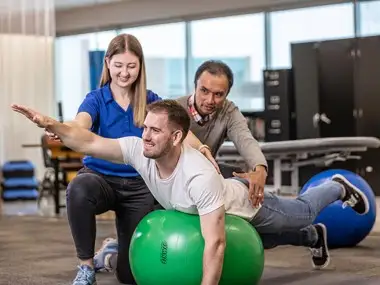
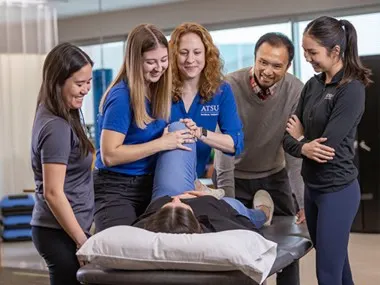
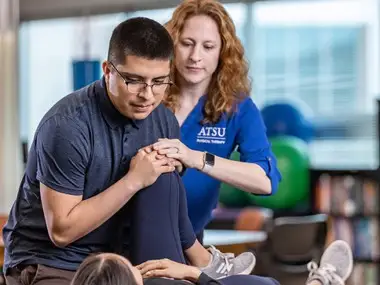
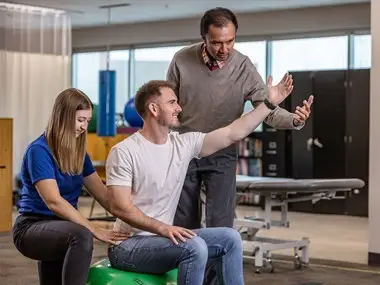
When you join one of ATSU-ASHS' PT degrees, you become part of a community dedicated to whole person healthcare and the advancement of the physical therapy profession. Hear from students, alumni, and faculty as they share how their ATSU experiences shaped their education, careers, and impact on the profession.
Voices of ATSU’s physical therapy programs
PT Life Moments
Physical therapy education is shaped by real experiences, milestones, and moments that define the student journey from classroom learning to clinical practice. From first patient interactions to moments of growth in confidence and skill, these stories reflect the challenges, progress, and achievements that occur along the way.