Potential Donors of Historic Objects and Materials
The Museum of Osteopathic Medicine collects historic materials that support its education, exhibition, and scholarship functions. The collections policies are guided by the Museum’s mission statement.
Thank you for your interest in artifact donation! The Museum of Osteopathic Medicine (MOM) is delighted to receive inquiries regarding artifact(s) you wish to donate to the collection. Anyone considering making any donation (large or small) should contact the Registrar first. “Drop offs” and unsolicited mailed items are strongly discouraged. Calling beforehand saves the donor the trouble and expense of shipping items that cannot be accepted. It also allows us to give advice on packing and shipping to ensure that your artifacts arrive safely.
Contact the Registrar to learn more about donating artifact(s). By phone at 660.626.2359, by email to chferguson@atsu.edu or by mail to:
Registrar
Museum of Osteopathic Medicine
A.T. Still University of Health Sciences
800 W. Jefferson
Kirksville, MO 63501
Statement of Purpose:
To preserve and promote the history and tenets of osteopathy through collections and research to a global audience.
Frequently Asked Questions (FAQ)
What does the museum collect?
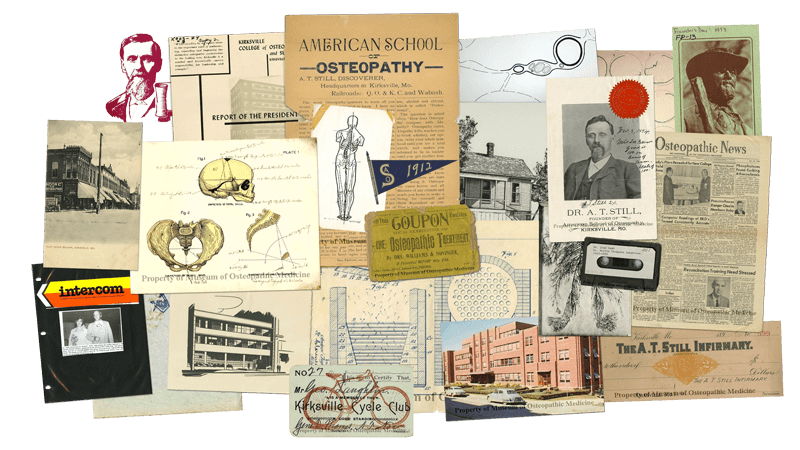
The artifacts that tell the story of osteopathy come in many different forms, including three-dimensional objects, photographs, manuscripts and documents, and printed material; the Museum collects all of these formats. We are the international museum for osteopathic history and thus collect materials documenting the growth and practice of osteopathic medicine in all parts of the world. We primarily focus on the early years of osteopathy (through 1950) and accept only limited materials dated after 1974.
What does the museum not collect?
The Museum has an adequate representation of the following types of artifacts and thus no longer accepts them:
- General medical books, unless written by a D.O.
- Medical bags
- General medical instruments and supplies
- Medications
- Plaques and trophies
- Kirksville diplomas (Diplomas from other schools are welcome.)
- State licenses, AOA membership certificates, and similar documents
- Treatment Tables
Exceptions may be made when there is something particularly unusual about the item in question.
How does the donation process work?
It is very important that you contact the museum first to discuss your potential donation. Once your donation is received, you will receive a temporary donation receipt to sign and return to the Museum. This will ask your wishes regarding any items not accepted into the collection; options include allowing the Museum to sell, trade or otherwise dispose of the items in a way to benefit the Museum, or returning them to you (at your expense). All possible donations are brought before the Collections Committee to determine if the item(s) should be accepted into the collection.
If MOM decides to acquire item(s) that you have offered, you will receive a Deed of Gift form. To complete the gift, you must sign and return the form. All declined item(s) will be disposed of using the wishes outlined on the temporary donation receipt.
Please note that this process takes several weeks to complete.
Is my donation tax-deductible?
Your gift may be tax deductible. However, MOM cannot provide appraisals for donated item(s) as this could call your deduction into question. Professional appraisers, however, will perform this service for a fee. Consult your tax professional for additional information.
Is my donation tax-deductible?
Donors of property gifts of over $5,000, except for gifts of publicly traded stock, must obtain an appraisal by an independent third-party appraiser in accordance with current tax law requirements. Donors are responsible for obtaining their own appraisals for tax purposes of real property or tangible or intangible personal property being given to the Museum of Osteopathic Medicine / ATSU and for any fees or other expenses related to such appraisals. Museum of Osteopathic Medicine / ATSU retains the right to obtain its own qualified appraisals of real property or tangible or intangible personal property being offered as a gift at its own expense.
Will the object I donate be kept on exhibit?
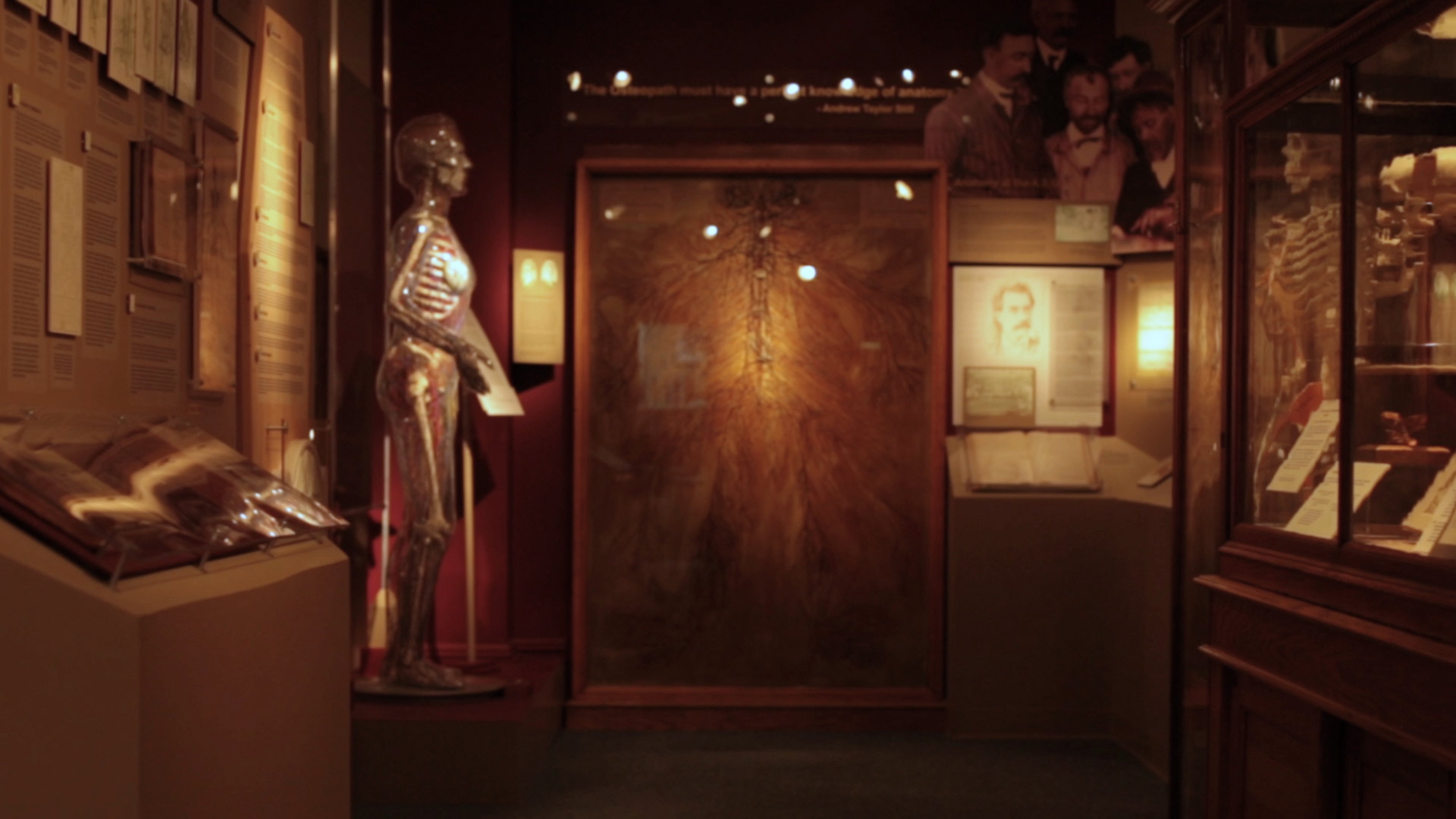
MOM’s collection is used in two ways: research and exhibition. Therefore, the museum does more than exhibit objects and documents. Unless MOM designates your materials for an exhibit, they will not be exhibited. Gallery space is limited and long-term display can have negative effects on artifact preservation. Artifacts are carefully cataloged and stored in a climate controlled environment so they will be available for future exhibits, for loan to other museums, or for research and reference for future generations. An ever-increasing number of MOM artifacts may be viewed in the Online Collection.
May I limit the use of my donation?
The Museum will accept restricted donations only in exceptional cases.
A note about framed objects
We recommend that documents and photographs be removed from frames before shipping (unless there is something unusual about the frame). Framing glass frequently breaks, slicing and damaging the enclosed objects. Frames are also bulky and expensive to ship. Once removed from the frames, however, be sure to provide adequate support for the photograph or document, such as sandwiching the item between two pieces of clean corrugated cardboard. (“Shirt cardboard” is not sufficient!) Please call if you have any questions about packing artifacts for shipment.